On 8 November 1291, the Great Council of Venice ordered every glass furnace inside the city to move across the lagoon to the island of Murano, roughly a mile and a half to the north. Glassmaking had grown into one of the Republic’s most valuable trades, but its workshops sat wedged between the timber houses and warehouses of a city with almost no open ground to act as a firebreak. The furnaces ran day and night at heats fierce enough to melt sand into liquid, and Venice had already lost buildings to blazes that started at the glassworks.
The decree gave two reasons, one written down and one merely understood. Fire risk was the official justification: a city built largely of wood could not safely go on hosting furnaces that were almost never allowed to go cold. The second motive went unstated but mattered just as much to the Venetian state. Moving every glassworker onto a single island, reachable only by boat and easy to watch, let the Republic keep its most valuable craftsmen under close observation and made the theft of technique far harder to carry off the lagoon undetected.
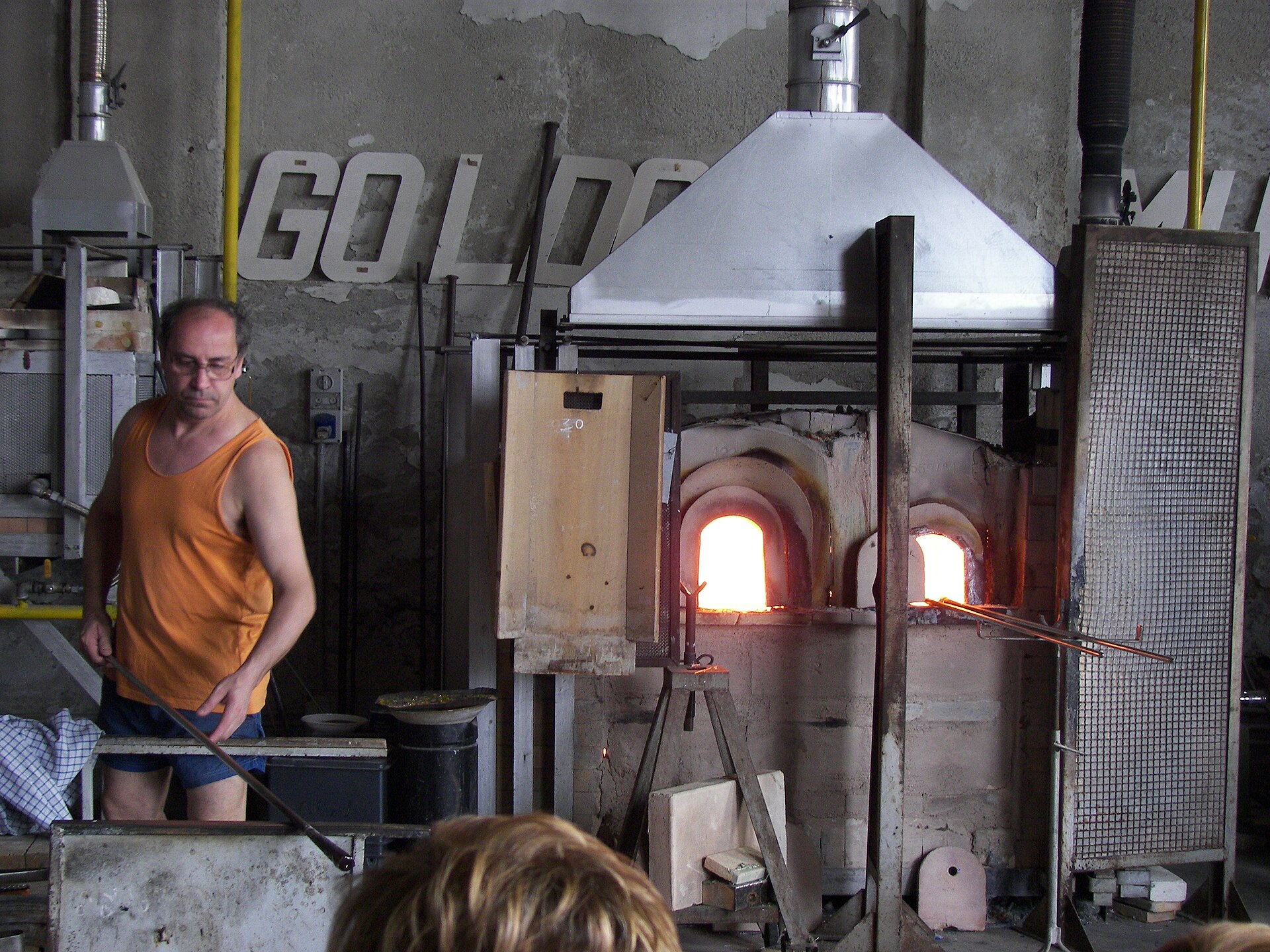
The relocation did not weaken Murano’s glassmakers; it made them. Within two centuries the island held a concentration of furnace skill unmatched anywhere in Europe, producing beads, mirrors and drinking vessels that travelled as far as the Ottoman court and the trading posts of West Africa. That concentration is still visible today, in a warren of narrow calli where the smell of hot sand and the thump of glass on the marver board still carry out through open workshop doors.
The clearest glass in Europe
The island’s reputation rested on a single technical breakthrough. Sometime around the middle of the fifteenth century, the Murano glassmaker Angelo Barovier worked out how to purify the raw materials of glass, using quartz pebbles ground fine and soda ash cleaned of its natural impurities, to produce a glass so colourless and transparent it was named cristallo, after rock crystal. The earliest surviving reference to it dates to 1453. Nothing else made in Europe came close: at a time when most window and vessel glass carried a greenish or brownish cast from iron impurities, Murano’s cristallo was compared to water.
Barovier came from a family already generations deep in the trade; Venetian archives record a glassmaking Barovier on Murano as early as 1343. His daughter Marietta became known in her own right for a type of intricately layered glass bead, exported in large quantities to Africa and the Americas. Cristallo made the family’s fortune and Murano’s international name. Other furnaces raced to copy the formula, and by the sixteenth century the island’s glass was the most imitated product in Europe, and the most fiercely protected. Recipes for cristallo were passed down within families as spoken instruction rather than written formula, precisely so that a stolen notebook could never hand a rival city the secret outright.
A craft the Republic would not let leave
Protecting it meant restricting the people who knew how to make it. Murano’s glassmakers held a genuinely privileged status under Venetian law: furnace masters’ daughters could marry into the nobility without the family losing its rank, an exemption granted almost nowhere else in the Republic. They paid for the privilege with their freedom of movement. A glassworker who left Venetian territory without a licence was first ordered home. If he ignored the summons, his family could be imprisoned in his place. If he still refused to return, the Republic reserved the right to send someone after him.
The threat was real enough to keep most of the trade’s technical secrets on the island for four hundred years, though a trickle of runaway glassmakers did carry Venetian methods into Bohemia, France and England over that time, seeding rival glass industries the Republic could never fully suppress. What could not be exported so easily was the furnace culture itself: generations of families working the same fires, refining formulas that were taught by hand and rarely written down.
Scarpa’s years at Venini
The old furnace families very nearly did not survive into the twentieth century. Cheap pressed glass and changing taste had reduced much of Murano’s output to tourist trinkets by 1900, and it took a new generation of entrepreneurs to rebuild the island’s reputation for serious design. Paolo Venini, a Milanese lawyer, founded his glassworks on Murano in 1921 and began commissioning painters, sculptors and architects rather than relying on furnace masters alone for design. Barovier & Toso, formed in 1936 when the old Barovier family firm merged with the Ferro Toso workshop, pursued a similar course, keeping Angelo Barovier’s direct descendants at the furnace nearly six centuries after cristallo.
The architect Carlo Scarpa worked with Venini through the 1930s and into the 1940s, a period the Metropolitan Museum of Art singled out for a dedicated exhibition in 2013. Scarpa did not blow glass himself; he redirected what Murano glass was for, stripping back the ornate, heavily coloured excess of earlier decades in favour of restrained forms and technical experiments with mottled, layered and acid-etched surfaces. The curator William Warmus judged that “Scarpa was there to calm the waters of Venetian excess” — a corrective that reset the island’s design ambitions for the rest of the century.
When the furnaces went cold
Murano’s own account of that history is kept at the Museo del Vetro, the island’s glass museum, housed in the Gothic Palazzo Giustinian. Its rooms move from Roman and Egyptian glass fragments through Renaissance cristallo beakers to contemporary studio pieces, several made a short walk from where they now sit under glass themselves.
The furnaces that museum celebrates came close to going dark in 2022. Gas and electricity prices rose sharply across Italy that autumn, in some cases several times over, and Murano’s kilns, which run at around 1,400°C and are traditionally kept lit around the clock, became ruinously expensive to feed. Furnace owners warned that a single week’s energy bill could now outstrip a month’s revenue, and a number of the island’s smaller workshops let their fires go out rather than keep burning at a loss, an event many in the trade described as unprecedented in living memory.
Not every furnace relit. The consortium representing the island’s glass businesses, Consorzio Promovetro Murano, today counts a little over forty member workshops and manufacturers, well down from the hundreds that operated at the trade’s twentieth-century peak, but still enough to keep genuine hand-blown Murano glass, a designation the consortium now certifies to guard against mainland and Asian imitations, in daily production. On the fondamenta below the museum, the furnaces that made it through the energy shock are, this year, still lit, and visitors can watch glassmakers work them at demonstration furnaces open to the public most days of the week.
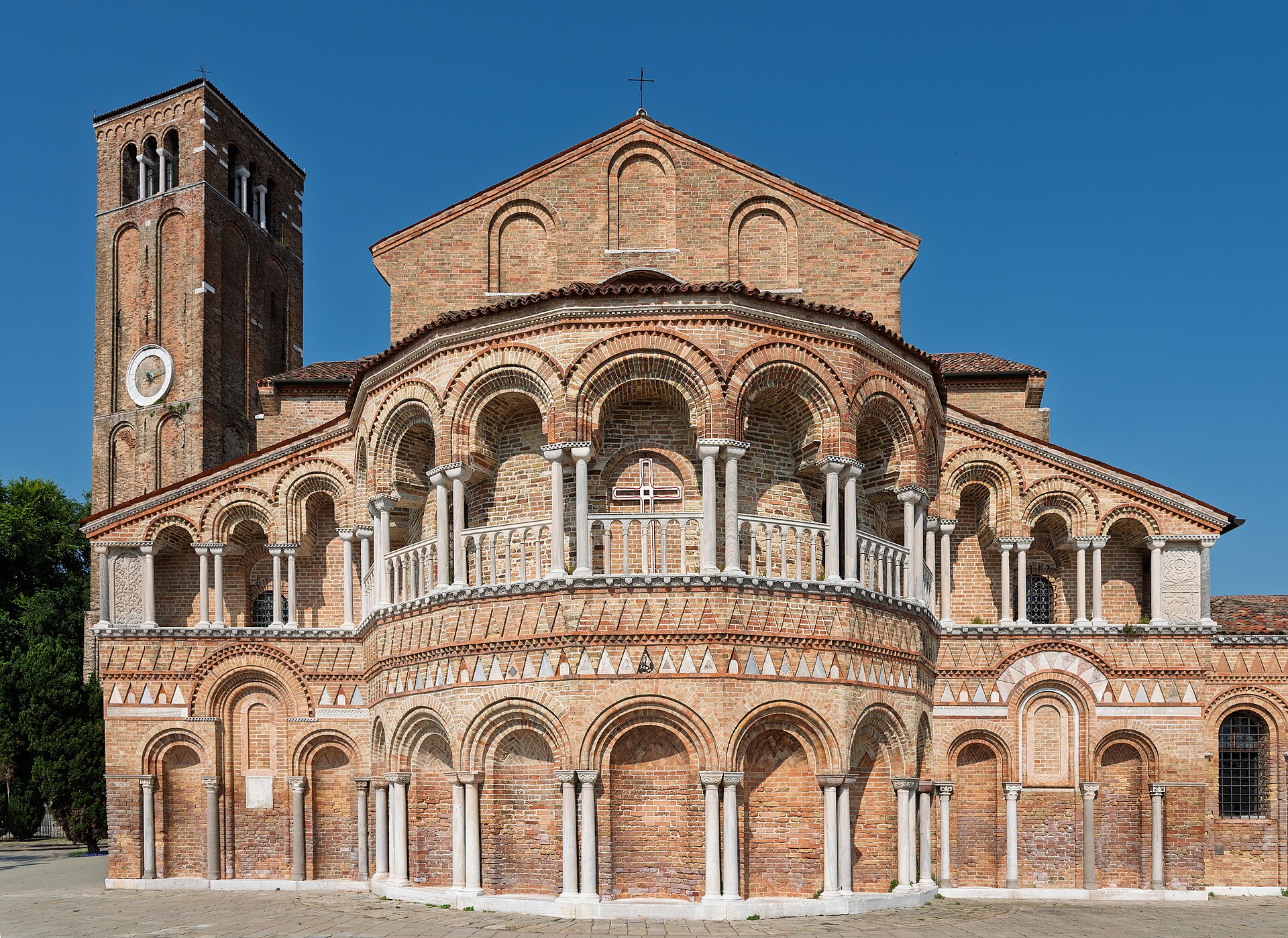
Lead image: Santi Maria e Donato, Murano. Photo: CC0 via Wikimedia Commons.