Hold a good sheet of Fabriano paper up to a window and a faint pattern appears inside the fibre itself, invisible until the light passes through it: a watermark, pressed into the pulp while it was still wet, centuries before anyone thought to use the same trick to authenticate banknotes. The technique is one of several that a single hill town in the Marche is credited with either inventing or perfecting, at a moment when paper itself was still a foreign novelty in Europe rather than the default surface for writing, and when a monastery scriptorium copying a manuscript could still expect to use parchment made from stretched and scraped animal skin instead.
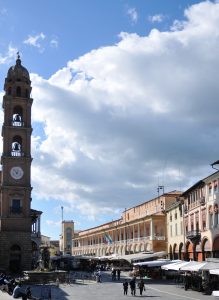
Paper had been made in China for well over a thousand years before it reached Italy, travelling west through Central Asia and the Islamic world, where papermaking was already an established craft, refined over centuries, long before European monasteries gave up parchment for good. Islamic papermakers had worked out how to pulp linen and cotton rags with water power well before the technique crossed into Christian Europe, and it was that practical, industrial-scale know-how, not merely the idea of paper, that made the difference once it reached Italian hands. Fabriano, an inland town in the Marche built around a fast-flowing stream ideal for driving mill machinery, is where the craft is generally said to have taken root on the Italian peninsula, arriving with prisoners and craftsmen who had learned the process in Arab lands and settled locally in the thirteenth century, in a district of the town still known today as Borgo Saraceno, the Saracens’ quarter. The name has stuck for more than seven hundred years, a small linguistic fossil of exactly how the trade arrived.
What Fabriano’s own papermakers did with that imported knowledge turned the town into Europe’s leading paper producer within a few generations, exporting finished sheets to Bologna, Genoa and, eventually, well beyond the Italian peninsula.
The hammer, the glue and the watermark
Three changes did most of the work. First, Fabriano’s mills adapted the water-powered hammers already used locally in fulling mills, machines that pounded raw cloth to felt it, and put them to work instead pulverising rags into pulp, replacing slow hand-pounding with a continuous mechanical process that could supply a workshop at industrial speed. Second, Fabriano’s papermakers began sizing their sheets with gelatine made by boiling scraps of animal hide, a technique reportedly borrowed from the town’s own tanneries, which stopped ink from feathering into the fibres and made the paper genuinely fit for a pen rather than only a brush; unsized paper, by contrast, drank up liquid ink the way blotting paper still does, blurring fine handwriting into an illegible smear. Third, and most famously, Fabriano produced Europe’s earliest documented watermarks, formed by sewing a shaped wire design onto the mould used to lift pulp from the vat; the oldest securely dated example comes from 1282, decades before any other European paper centre can show comparable evidence. Together the three innovations turned paper from a curiosity into a product that could finally compete with parchment on price, consistency and speed of manufacture. Merchants, notaries, bankers and, before long, the first printers found Fabriano paper reliable enough to build businesses on, and demand for it grew steadily even while parchment remained the material of choice for documents intended to last centuries rather than decades.
From lira notes to artists’ pads
Fabriano’s paper trade, dated by the modern Fabriano company itself to the year 1264, never really stopped after the Middle Ages; it simply changed what it supplied instead. In more recent centuries the town’s mills built a second reputation supplying high-security paper for official documents and banknotes, work that depends on exactly the kind of controlled, watermarked, hard-to-forge sheet the town had spent the thirteenth century perfecting. Today, under the ownership of the Fedrigoni paper group, Fabriano is better known internationally to painters than to central bankers, its watercolour, drawing and printmaking papers sold in art shops from Rome to Tokyo and used by students and professionals well beyond Italy. The two trades share the same underlying skill, though: making paper whose exact weight, texture and surface can be trusted to behave the same way, sheet after sheet, whether the ink going onto it is a signature or a watercolour wash.
Amalfi’s cotton paper
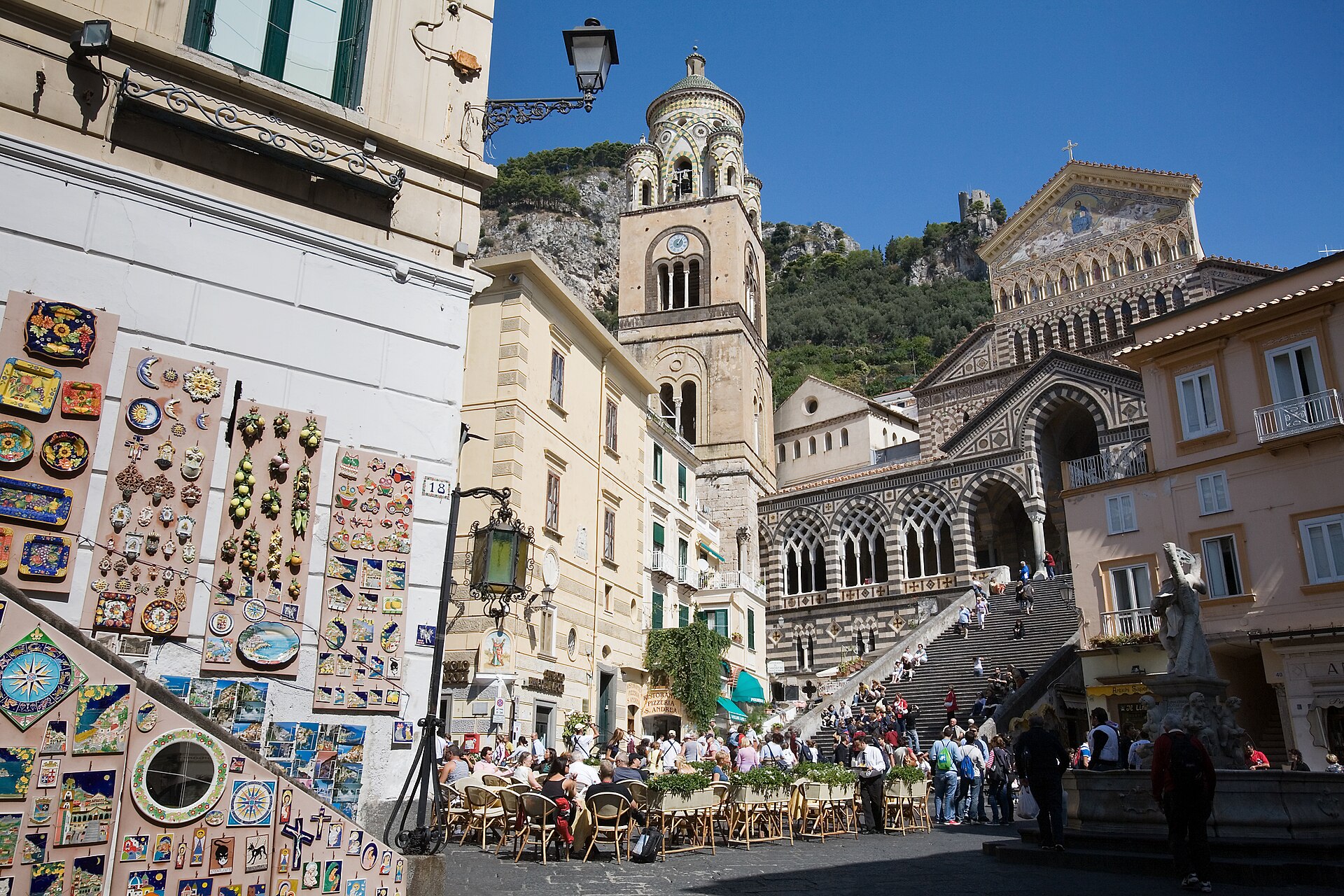
On the other side of the peninsula, the coastal town of Amalfi developed a papermaking tradition of its own, likely picked up through the same Arab and eastern Mediterranean trading contacts that shaped so much of Amalfi’s medieval commerce, when the town ran one of Italy’s most active maritime republics, with trading posts and consular representatives stationed as far away as Constantinople and Alexandria. Amalfi’s product, known as carta bambagina for the cotton and linen rag pulp it was made from, was distinctive enough, and durable enough, that the Holy Roman Emperor Frederick II tried to ban it in 1220, decreeing that only parchment should be used for official documents because he considered rag paper less durable. The order, aimed at safeguarding the legal standing of official records, did little to stop production for everyday use. By the eighteenth century, roughly twenty mills were operating in and around Amalfi, powered by the same fast-flowing mountain stream that still runs through the town’s old paper-making district, a narrow ravine above the harbour that locals still call the Valle dei Mulini, the Valley of the Mills.
The mill that became a museum
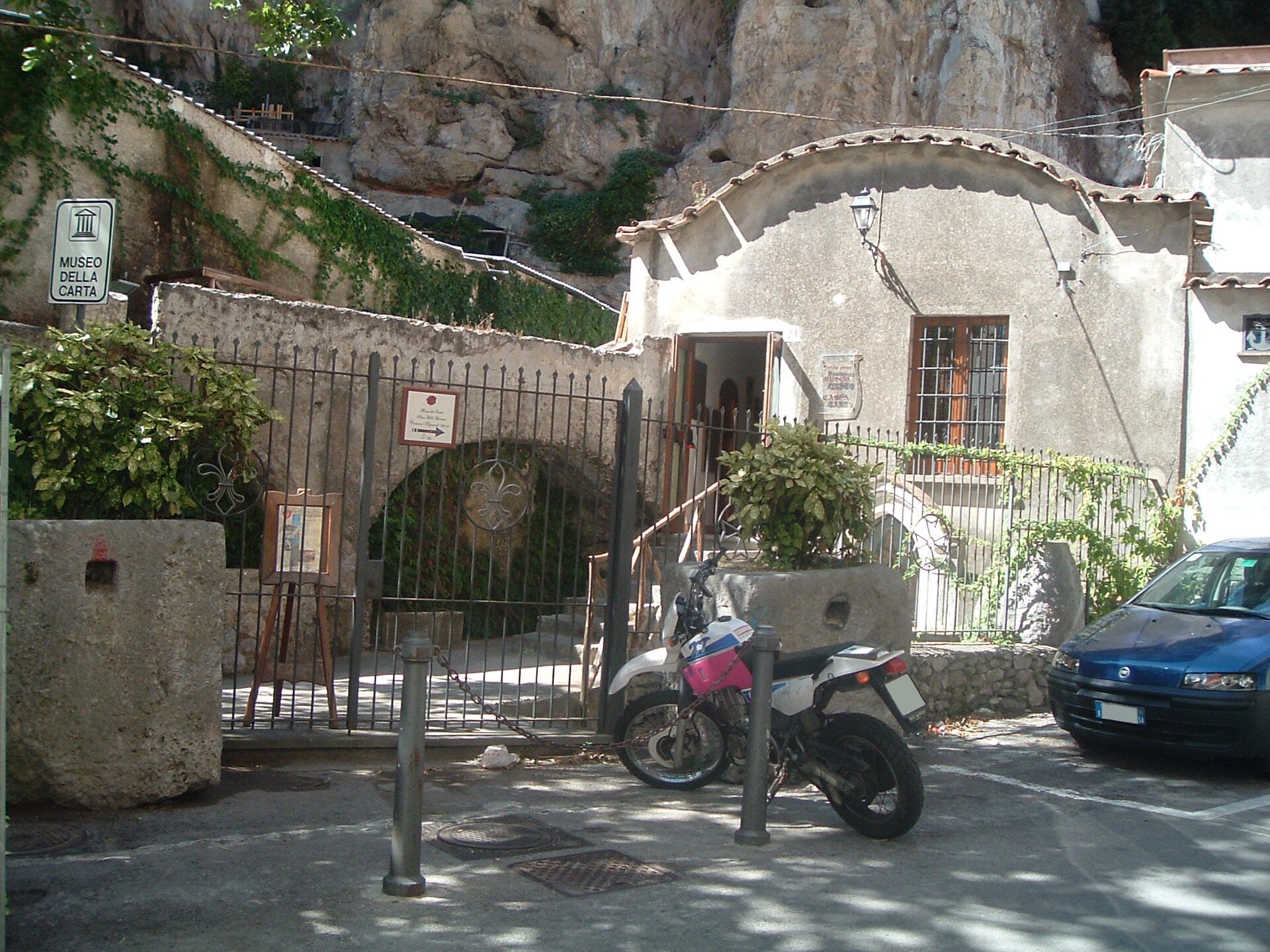
One of those mills, dating back centuries and formerly run by the Milano family, now houses the town’s Museo della Carta, converted from a working paper mill into a museum in 1969 at the wishes of Nicola Milano, the last owner to run it as a commercial business, who wanted the building’s machinery kept intact rather than sold off or scrapped once the mill itself stopped turning a profit. Its water-driven machinery, including the stamping hammers used to beat rags into pulp, has been restored to full working order and is still demonstrated to visitors rather than displayed as static equipment, giving them a working sense of a process that, on this stretch of coast, ran almost unchanged for six centuries before industrial paper mills elsewhere made it obsolete for everyday use. Amalfi’s paper trade never entirely stopped either: at least one family mill in the valley still hand-produces bambagina paper today, using rag pulp and the same slow, sheet-by-sheet forming process, for stationery, wedding invitations and fine printing that customers specifically seek out for the deckle edge and irregular texture no industrial paper can quite reproduce.
Lead image: Amalfi. Paper was made in the mills of the Valle dei Mulini behind the town from the thirteenth century. Photo: CC BY-SA 3.0 via Wikimedia Commons.