Andrea Amati was already an established instrument maker in Cremona by the 1550s, working in a form of stringed instrument that had only recently settled into something recognisable as the modern violin. His workshop, on what is now Cremona’s Via Sicardo, produced instruments for the French royal court of Charles IX, several of which survive today in museum collections. Amati did not simply build violins; he fixed the proportions, the arching of the belly and back, and the basic outline that Cremonese makers would refine, but never fundamentally abandon, for the next two hundred years. The instrument he was refining had existed in cruder forms elsewhere in northern Italy, but it was in Cremona that its component parts, the f-holes, the scroll, the bridge and soundpost, settled into the arrangement still used on every violin built anywhere today.
His descendants carried the workshop forward. Nicolò Amati, Andrea’s grandson, ran it through most of the seventeenth century and trained a generation of makers who would eventually eclipse him, including, by most accounts, a young Antonio Stradivari, who appears to have worked in or near the Amati workshop as a boy in his early teens. A violin bearing Stradivari’s earliest surviving label, from 1666, credits him as a pupil of Nicolò Amati. He stopped invoking the association soon afterward.
What Stradivari built once he was working for himself has never been matched to universal agreement, but it has certainly never been forgotten.
Stradivari and del Gesù
Antonio Stradivari, born around 1644, worked in Cremona for roughly seventy-five years and died there on 18 December 1737. Across that career he is estimated to have made 1,116 instruments, of which around 960 were violins; the rest were cellos, violas, guitars and a small number of harps. Only a fraction survive. Around 650 Stradivari instruments are known today, including somewhere between 450 and 512 violins, each one tracked, insured and, in most cases, still played rather than kept purely as a museum object. Later generations gave the best-known survivors their own names, usually after a famous owner or the moment of their sale, so that dealers and players today speak of “the Messiah”, “the Lady Blunt” or Cremona’s own “Vesuvio” much as they would speak of individual works of art, because in the trade’s own estimation that is exactly what they are.
Stradivari’s near-contemporary Giuseppe Guarneri, known as “del Gesù” for the IHS Christogram he added to his labels, worked a few streets away and built instruments that violinists today rate second only to Stradivari’s own, sometimes not even that. The two families’ instruments are compared constantly and rarely tire the comparison: broadly, Stradivari violins are prized for a clear, even projection across the whole range, while del Gesù’s are often described as darker and more complex under the ear, qualities that have made both makers’ best surviving instruments worth many millions of pounds at auction.
The tradition on UNESCO’s list
The Amati-Stradivari-Guarneri lineage did not end with the eighteenth century, even if the very best instruments belong to it. Cremona’s violin trade nearly died out after Stradivari’s generation, revived, faded again, and rebuilt itself repeatedly over the following two hundred years, sustained by a school of making that survived even when demand for new instruments did not. In 2012, UNESCO inscribed traditional violin craftsmanship in Cremona on its Representative List of the Intangible Cultural Heritage of Humanity, recognising not a museum collection but a living set of hand skills, from selecting spruce and maple to varnishing, still taught and practised in the city under the same name as Stradivari’s own trade. The listing put Cremona’s violin makers in the same UNESCO category as practices such as Neapolitan pizza-making and French bread baking: crafts defined less by any single artefact than by knowledge passed between people, at risk of disappearing if the chain of teaching is ever broken.
A museum built for sound
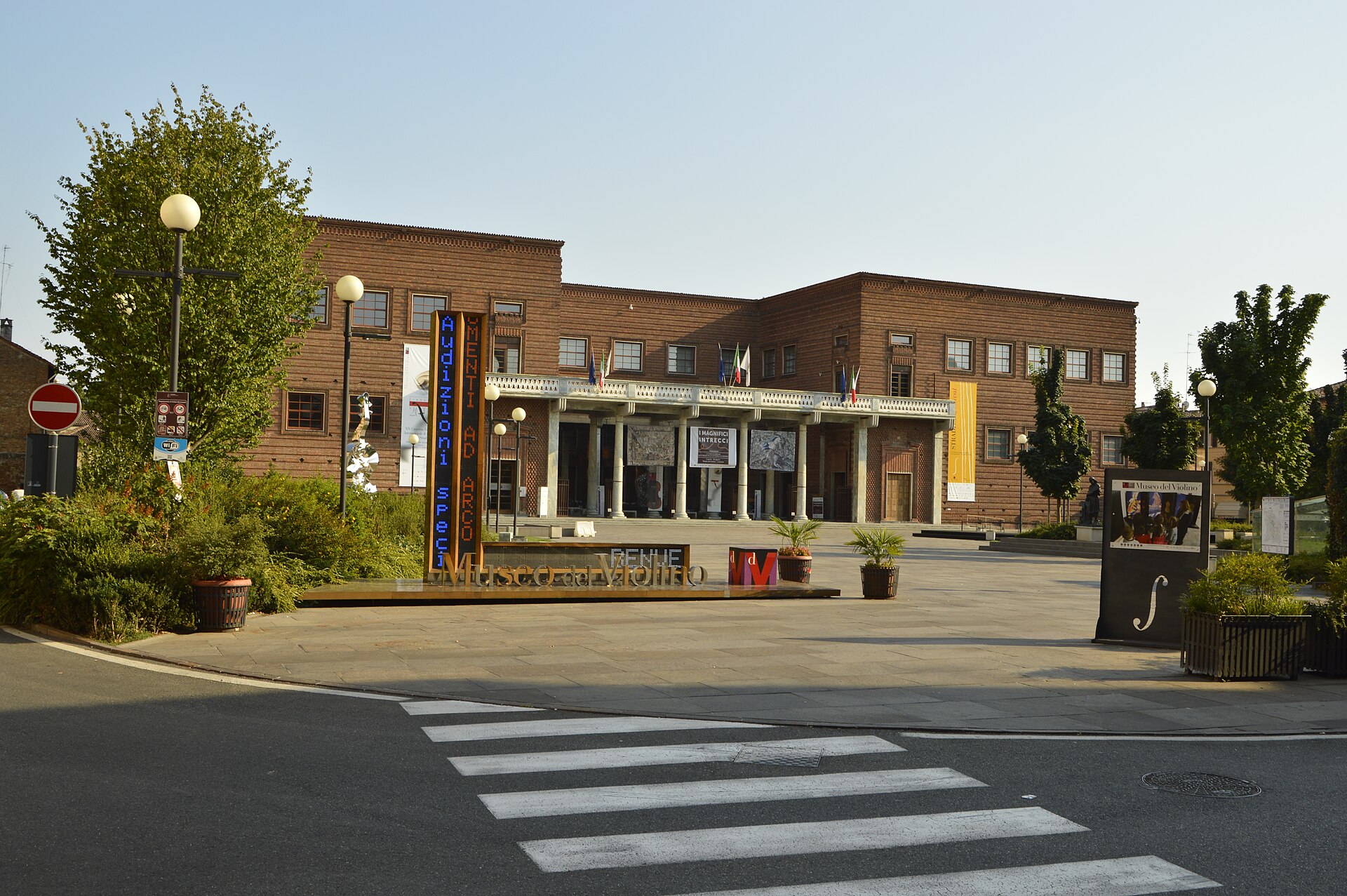
Cremona’s civic collection of historic instruments dates back to 1893, when the maker Giovanni Battista Cerani donated instruments and workshop models to the city, but the collection did not have a purpose-built home until 2013. The Museo del Violino, formally the Fondazione Antonio Stradivari, opened that September in a restored building on Piazza Marconi and now holds, among other treasures, more than seven hundred objects from Stradivari’s own workshop, including wooden models and tools, donated to the city in 1930. Its centrepiece is not a display case but a room built to be heard in: the Auditorium Giovanni Arvedi, a 464-seat concert hall with an elliptical stage, engineered with the acoustician Yasuhisa Toyota, whose past work includes the Walt Disney Concert Hall in Los Angeles. The hall exists specifically so that the museum’s instruments can be played, not merely looked at, in front of an audience, and the museum’s own festival programming regularly puts Stradivari and Guarneri instruments from its vaults into the hands of visiting soloists rather than leaving them permanently behind glass.
Recording the irreplaceable
That same logic drove one of the more unusual projects in the museum’s short history. In October 2019, with a handful of the city’s most valuable instruments due to be recorded for a permanent digital sound archive, Cremona closed streets in its historic centre to traffic so that a run of extraneous noise, engines, scooters, market stalls, would not bleed into microphones set up to capture instruments that cannot simply be replaced if damaged. The resulting recordings sit alongside the physical instruments as an insurance policy of a different kind: a record of exactly how a given Stradivari or Guarneri sounded at a particular moment, preserved independently of the wood and varnish that produced it.
The trade those recordings were made to honour has never really stopped. Cremona’s old town still holds one of the densest concentrations of working violin ateliers anywhere in the world, apprentices and independent makers among them, many trained at the city’s specialist violin-making school before setting up benches of their own within a few streets of where Andrea Amati first worked. The wood itself still comes largely from the same sources Stradivari would have used: spruce for the soundboard, cut in winter from high-altitude forests in the Val di Fiemme in the Dolomites, and maple for the back and ribs, chosen as much for the figure of its grain as for its acoustic properties.
Visitors can watch some of the city’s makers at work through open shopfronts on the way to the museum, planing spruce tops by hand in workshops that look, deliberately, much as they would have four hundred years ago. New instruments from Cremona’s current generation of luthiers sell for a fraction of a historic Stradivari’s price, but they are built to the same templates, in the same rooms, by hands trained in an unbroken line back to the workshop on Via Sicardo.
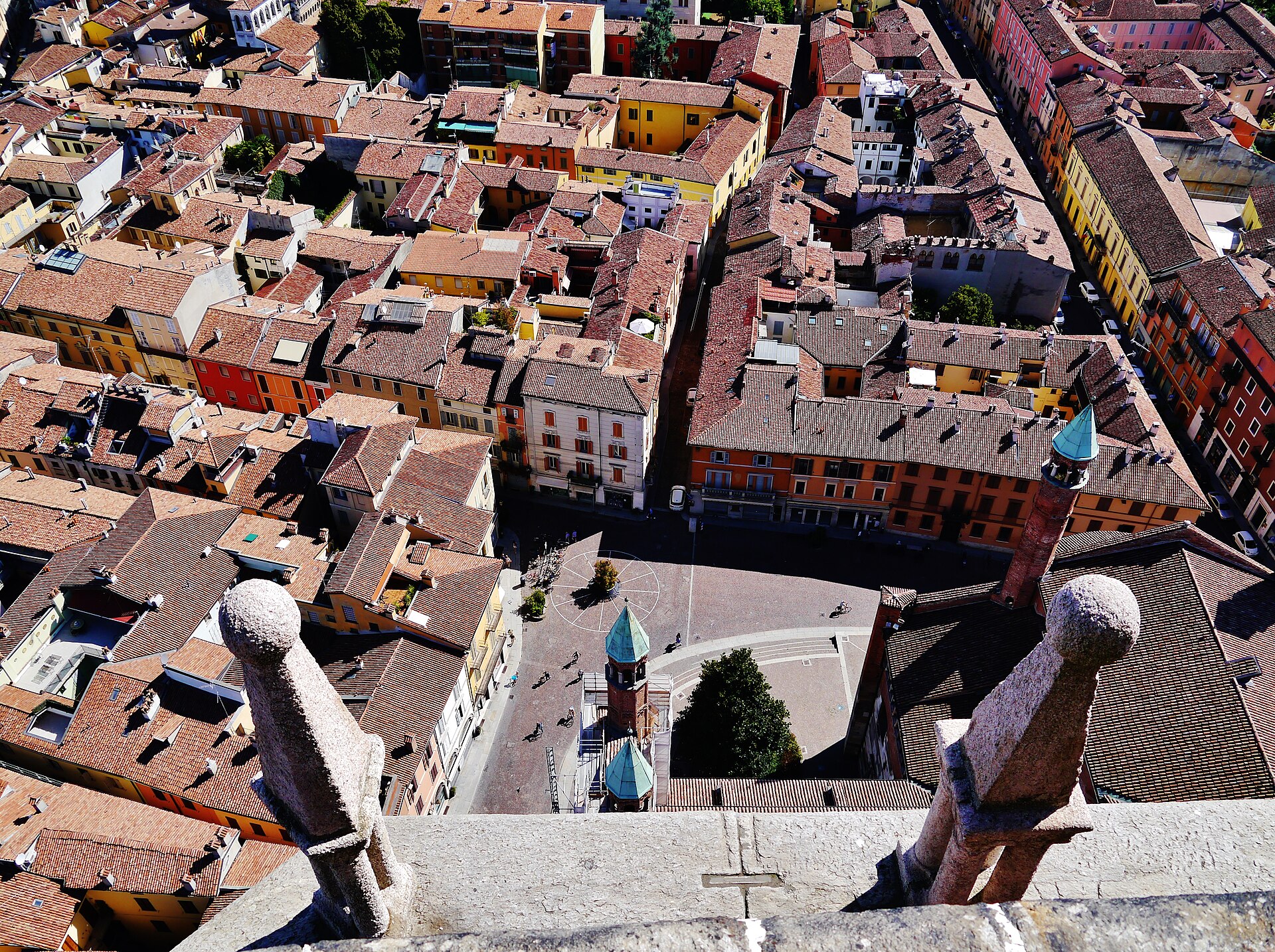
Lead image: Cremona, where Andrea Amati established violin making in the sixteenth century. Photo: CC BY-SA 4.0 via Wikimedia Commons.