On 8 July 1913 a sixteen-year-old textile worker from Udine stepped off a ship at Ellis Island, declared herself a student, and produced a hundred dollars and a train ticket to San Francisco. Assunta Adelaide Luigia Modotti Mondini, soon shortened to Tina Modotti, was joining her father and sister in California’s Italian émigré community. Within a decade she would be one of the most original photographers working in Mexico. Within three decades she would be dead, her legacy a subject of dispute for another forty years before it was properly recovered.
Modotti’s early years in San Francisco and then Los Angeles gave no clear sign of the photographer she would become. She worked as an artist’s model, acted in amateur theatre and appeared in a handful of silent films, most substantially The Tiger’s Coat in 1920. Photography was not entirely foreign to her family: her uncle Pietro Modotti had run a photography studio in Udine, and her father had briefly kept one in San Francisco. It was through her acting and modelling circle, though, that she met the photographer Edward Weston, whose formal rigour and darkroom discipline she absorbed while sitting for him.
Following Weston to Mexico City
Modotti first travelled to Mexico in early 1922, arriving two days after the death from smallpox of her partner Roubaix de l’Abrie Richey. She returned to San Francisco, then came back to Mexico City in 1923 with Weston, running his portrait studio without pay in exchange for his teaching. The arrangement placed her at the centre of Mexico City’s postrevolutionary avant-garde, among Diego Rivera, Frida Kahlo and the muralists redefining Mexican public art after the 1910–1920 revolution.
Where Weston photographed abstracted forms — shells, peppers, sand dunes — Modotti increasingly turned her camera on people and on the tools and gestures of manual labour. Her most recognised photographs from this period isolate hands: a puppeteer’s hands, a worker’s hands resting on a shovel, hands cupped around a bowl. A 1927 still life titled Bandolier, Corn, Sickle arranged an ammunition belt, a maize cob and a farm sickle into a composition that read, without a single human figure in it, as a portrait of the Mexican countryside’s political condition.
Her photographic career widened further in 1926, when the writer Anita Brenner commissioned both Modotti and Weston to photograph Mexican folk and religious art for the book Idols Behind Altars, published two years later; historians still dispute exactly how the resulting credits should be divided between the two photographers. That same year Modotti began a brief affair with Diego Rivera and modelled, unclothed, for two of his murals at the Chapingo agricultural school outside Mexico City, allegorical figures known as The Earth Enslaved and Germination. When Weston returned to California in November 1926, Modotti chose to remain in Mexico, and the following years produced the bulk of the photographs, of murals, of demonstrations and of Mexico City’s poor, on which her reputation now rests.
Photographing for the revolution
By 1927 Modotti had joined the Mexican Communist Party, having already worked with the International Red Aid organisation from 1925. Her photographs began appearing regularly in El Machete, the newspaper of the Mexican Communist Party, where images of clenched fists, marching workers and rural campesinos served the paper’s explicitly agitational purpose rather than a gallery wall. The photographer and critic Manuel Álvarez Bravo later divided her career into a “Romantic” phase and a “Revolutionary” one; a December 1929 retrospective of her work at Mexico’s National Library was billed as the first revolutionary photographic exhibition held in the country.
Expulsion after Mella’s murder
On 10 January 1929 the exiled Cuban revolutionary Julio Antonio Mella, Modotti’s partner at the time, was shot dead as the two of them walked home together in Mexico City. Modotti was detained and interrogated, then cleared, but a hostile press campaign portrayed her as a dangerous foreign agitator. Combined with the political turbulence that followed an unrelated assassination attempt on Mexico’s president-elect months later, the campaign against her culminated in 1930, when the Mexican government expelled her from the country.
She went first to Berlin, then to Moscow, where she worked for International Red Aid rather than as a photographer; by most accounts she stopped making photographs after 1931. In 1936, alongside the Italian communist Vittorio Vidali, whom she would later marry, she left for Spain as the civil war began, working there until the Republican collapse in 1939, including a period assisting the Canadian physician Norman Bethune during the retreat from Málaga in 1937.
Death in a Mexico City taxi
Modotti and Vidali returned to Mexico under assumed identities in 1939. She died on 5 January 1942, at forty-five, of heart failure in a taxi on her way home from a dinner at the house of the architect Hannes Meyer. An autopsy recorded natural causes, though Diego Rivera and others suspected foul play linked to what she knew of events in Spain; no evidence of that has ever surfaced. She was buried in Mexico City’s Panteón de Dolores beneath an epitaph written by the poet Pablo Neruda, later a Nobel laureate.
Udine remembers its own
Modotti’s photographs were largely forgotten for three decades after her death, dismissed even by some who had known her as a minor talent overshadowed by Weston. Serious critical recovery began in the 1970s and accelerated through international retrospectives from the 1990s onward, moving her negatives and vintage prints into the collections of institutions including the International Center of Photography, the Art Institute of Chicago and the Philadelphia Museum of Art, alongside the Weston-era holdings at the Center for Creative Photography in Arizona. A 1996 retrospective at the Philadelphia Museum of Art marked a turning point in market recognition, and the Vienna museum KunstHausWien staged a further retrospective in 2010 that included around 250 photographs, many previously unseen by the public. In 2002 the actress Ashley Judd played Modotti in the film Frida, and in 2017, on what would have been her 121st birthday, she was the subject of a Google Doodle shown in Mexico.
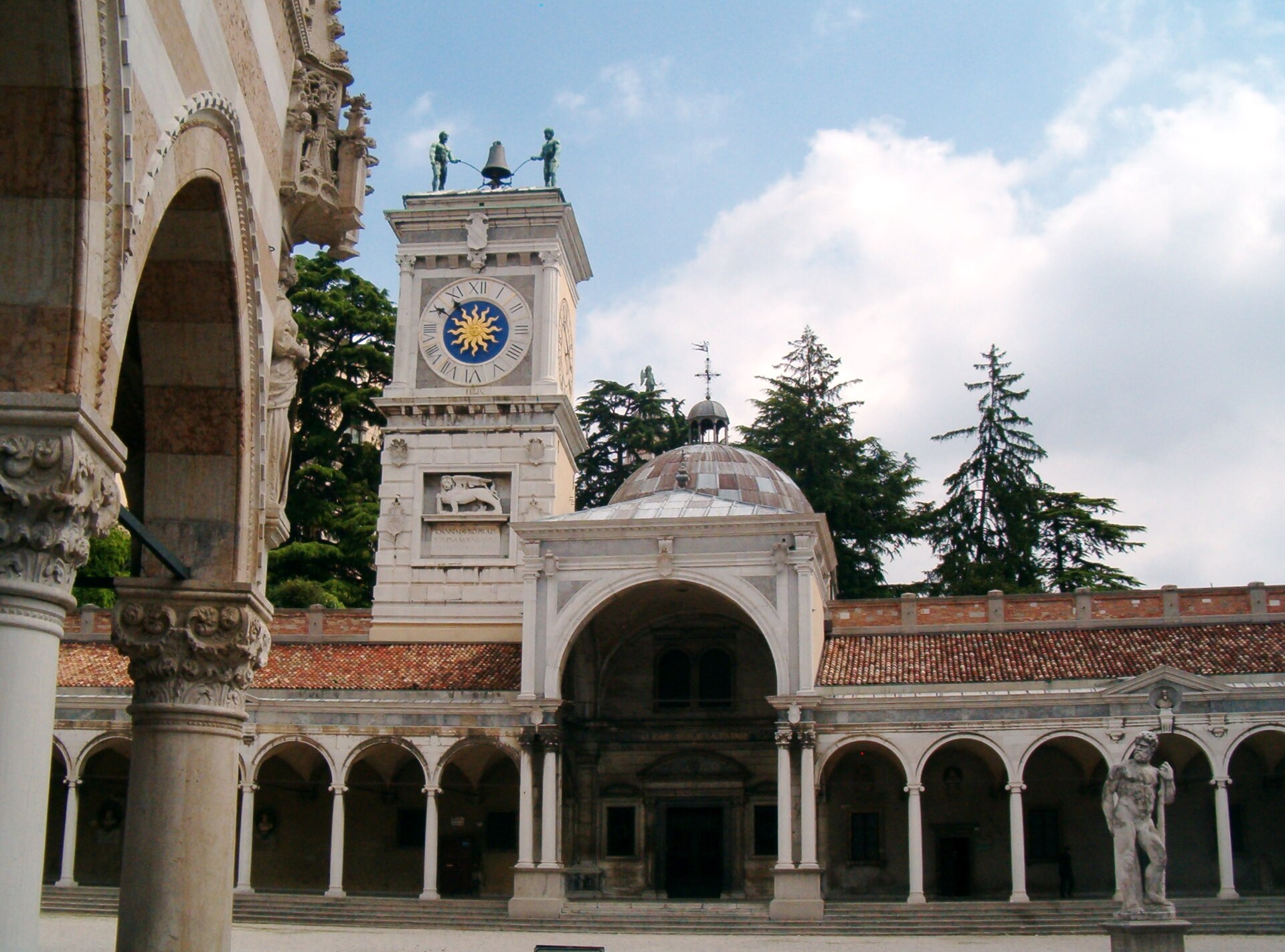
Udine has reclaimed her as a native daughter. Her birthplace on what is now Via Pracchiuso carries a bas-relief memorial, installed in 2005 by the artist Franco Del Zotto with text in Italian, English, Spanish and Friulian, and the city’s former fish market has been renamed the Galleria Tina Modotti, now used as an exhibition space. Udine’s museum of modern and contemporary art staged a dedicated retrospective, Tina Modotti: La Nuova Rosa, over the winter of 2015–16, giving the city that a teenager left behind in 1913 a permanent claim on her afterward as an artist.
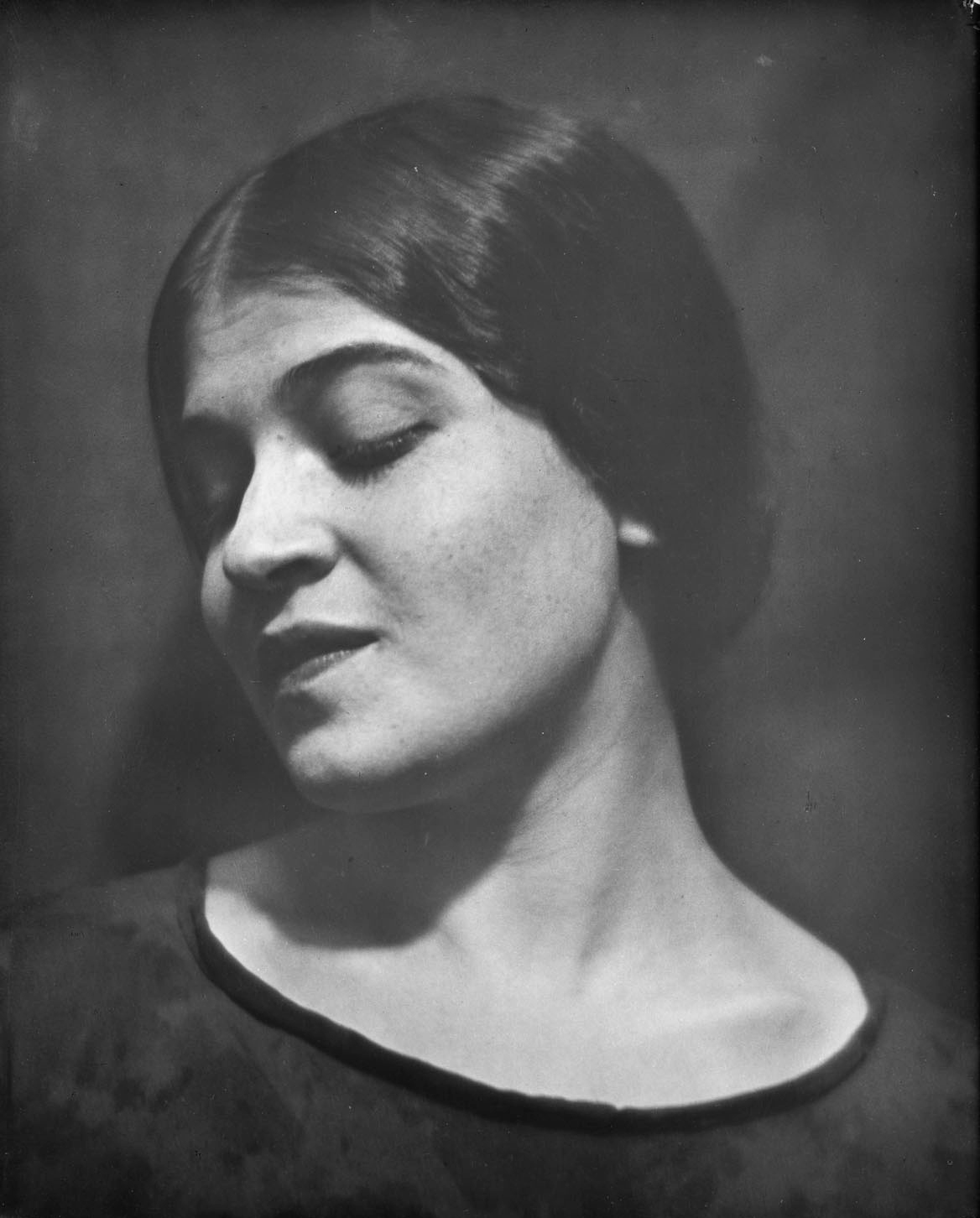
Lead image: Tina Modotti photographed by Edward Weston, 1924. Public domain via Wikimedia Commons.