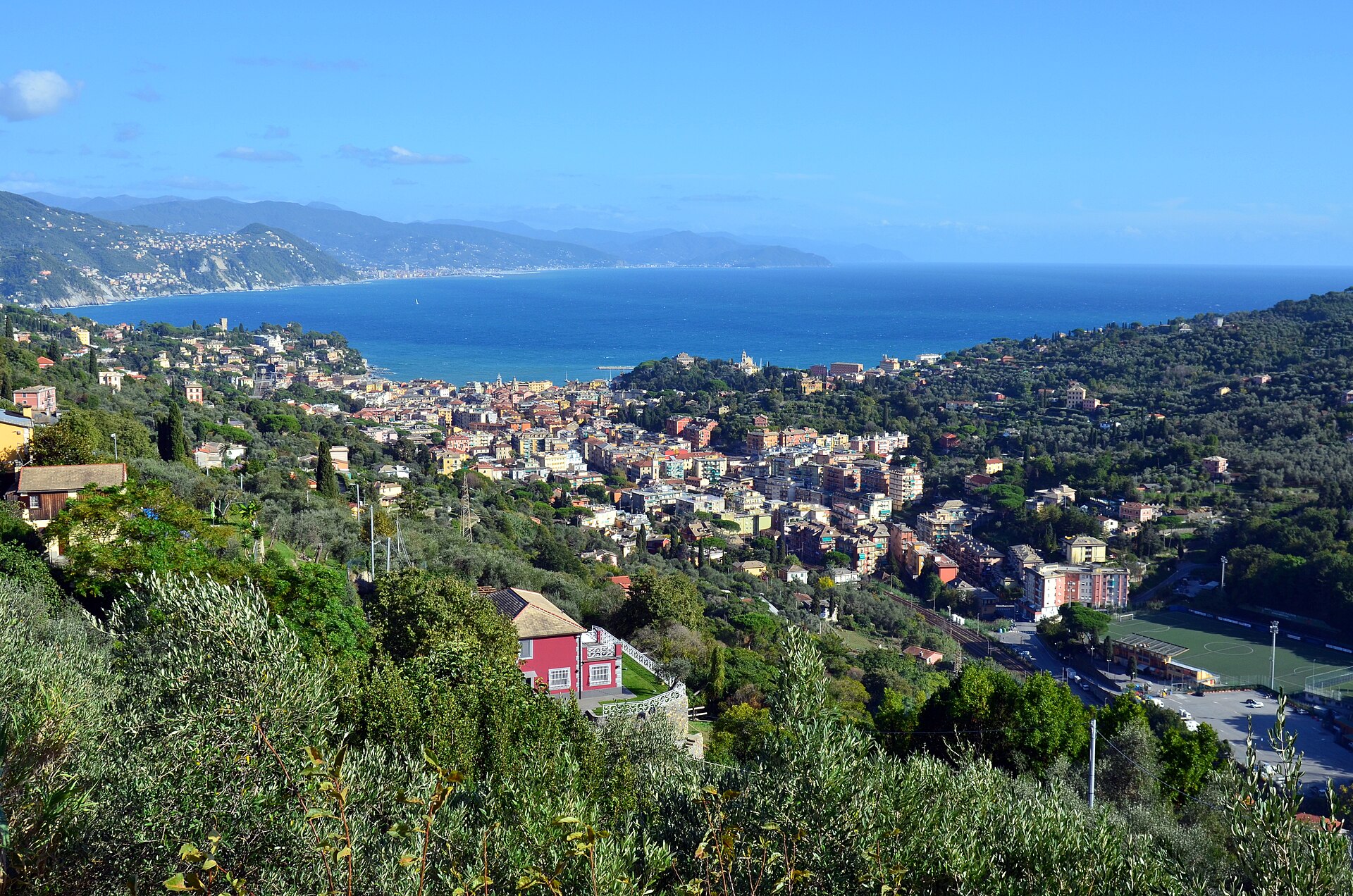
Every morning through the 1950s, a young amateur photographer commuted from the Venice Lido to San Marco by vaporetto, camera in hand. Gianni Berengo Gardin had been taking pictures since the early years of that decade, and in 1954 the weekly magazine Il Mondo published his first photographs. Six years later, on one of those same water-bus journeys, he made an image of a man in black reflected in a mirrored cabin door that Henri Cartier-Bresson would later rank among the eighty most important photographs ever taken. Berengo Gardin, born on 10 October 1930 in Santa Margherita Ligure on the Ligurian coast, had found both his subject and his method: patient observation of ordinary life, made without staging or spectacle.
He turned fully professional in 1962, after eight years of building a reputation as an amateur. What followed was one of the longest working careers in postwar European photography, and also one of the most prolific in print: more than 250 photobooks carry his name, the overwhelming majority of them in black and white, a medium he preferred throughout his life even as colour photography became commonplace. Over the same decades he was the subject of more than 300 solo exhibitions, a rate of production that made him one of the most widely shown Italian photographers of his generation without his ever adopting the visual mannerisms, harsh contrast or theatrical framing, that photojournalism often rewards.
Documenting Olivetti’s workers, not its typewriters
From the 1960s Berengo Gardin worked on commission for major Italian companies, including the architecture practice of Renzo Piano, whose buildings he began documenting in 1979, as well as Olivetti, Fiat, Alfa Romeo and the steel producer Italsider. His approach to these industrial commissions was distinctive: rather than photographing the finished products that made these companies famous, typewriters, cars, sheet steel, he photographed the people who made them, turning corporate assignments into records of working life on the factory floor, canteen and changing room. The Olivetti pictures in particular treated the model office-machine maker not as a design showcase but as a workplace with its own rhythms and hierarchies.
Between 1966 and 1983 he produced a parallel body of work for the Touring Club Italiano, supplying photographs for the club’s regional guidebooks to Italy and, later, other European countries. That commission sent him repeatedly back to Venice and across the rest of the peninsula over nearly two decades, building a store of images of ordinary Italian towns and landscapes that ran in parallel to the more pointed social documentary work for which he later became better known.
Inside the asylum wards
In 1968 the psychiatrist Franco Basaglia, who was dismantling the locked-ward system at the psychiatric hospital in Gorizia, asked the photographer Carla Cerati to document conditions inside Italy’s asylums. Cerati brought in Berengo Gardin, and together they photographed inside four institutions: Gorizia, where Basaglia’s reforms gave them greater access; Colorno, near Parma; a hospital in Florence, where their access was more restricted; and Ferrara, though none of the Ferrara images made the final selection. The conditions they found and photographed, patients restrained in beds or left for hours in bare, overcrowded wards, were still standard practice in Italian psychiatric institutions at the time, protected from outside scrutiny by the closed nature of the asylum system itself.
The resulting book, Morire di Classe (Dying by Class Status), was published by Einaudi in May 1969 with an introduction by Basaglia and his wife and collaborator Franca Ongaro. Its photographs of restrained, isolated and neglected patients shocked Italian readers and became one of the most widely cited documents in the campaign that led, nine years later, to Law 180 of 1978 — the so-called Basaglia Law, which mandated the closure of Italy’s psychiatric hospitals and remains a landmark in the history of mental health reform. Historians differ on how directly the book itself changed legislative outcomes, but its role in shifting Italian public opinion on institutional psychiatry is not in dispute. Law 180 required Italy’s psychiatric hospitals to stop admitting new patients and eventually to close altogether, replacing them with community-based mental health services, a reform still referred to internationally as the Basaglia Law.
Turning the camera on cruise ships
Well into his eighties, Berengo Gardin returned to the city that had shaped his early work, this time as a campaigner. He photographed the enormous cruise ships passing through the Giudecca Canal and St Mark’s Basin on their way to Venice’s passenger terminal, publishing the images through the newspaper la Repubblica to argue that vessels many times the height of the surrounding buildings were eroding the lagoon’s fragile foundations and overwhelming its historic centre with tourists. His photographs, exhibited around Venice from 2014, became one of the recognisable visual arguments in a campaign that drew support from residents, architects and eventually UNESCO, which threatened to add Venice to its list of endangered World Heritage sites unless the largest ships were rerouted. In 2021 the Italian government moved to ban vessels above a set tonnage from the Giudecca Canal and St Mark’s Basin, diverting them to the industrial port of Marghera, a decision campaigners including Berengo Gardin had been pressing for over the preceding decade.
The images themselves worked by simple juxtaposition rather than argument: a single frame placing a cruise liner many storeys tall alongside the low domes and bell towers of the historic skyline was enough to make the disproportion self-evident. It was the same method, patient framing rather than commentary, that had defined his industrial and asylum photography decades earlier, applied this time to his own adopted city.
An archive of 1.5 million negatives
Berengo Gardin died on 6 August 2025 at the age of ninety-four, having worked as a photographer for more than seventy years since his first published pictures appeared in 1954. He continued photographing and publishing into his final years, and a 2022 documentary, Nei Giardini della Mente (In the Gardens of the Mind), returned with him to the subject of the asylum photographs more than half a century after Morire di Classe, revisiting the same institutional buildings he had photographed as a young reportage photographer. His archive, comprising more than 1.5 million negatives spanning seven decades of Italian social and industrial life, is now held by a Milan-based photography foundation, which continues to catalogue and exhibit the collection to researchers and the public.
Venice, the city where his career began on a commuter boat in the 1950s, still carries the visible result of his last campaign: the great ships that once dwarfed the Doge’s Palace on their way past St Mark’s Square no longer make that passage, rerouted instead around the lagoon he spent decades photographing.
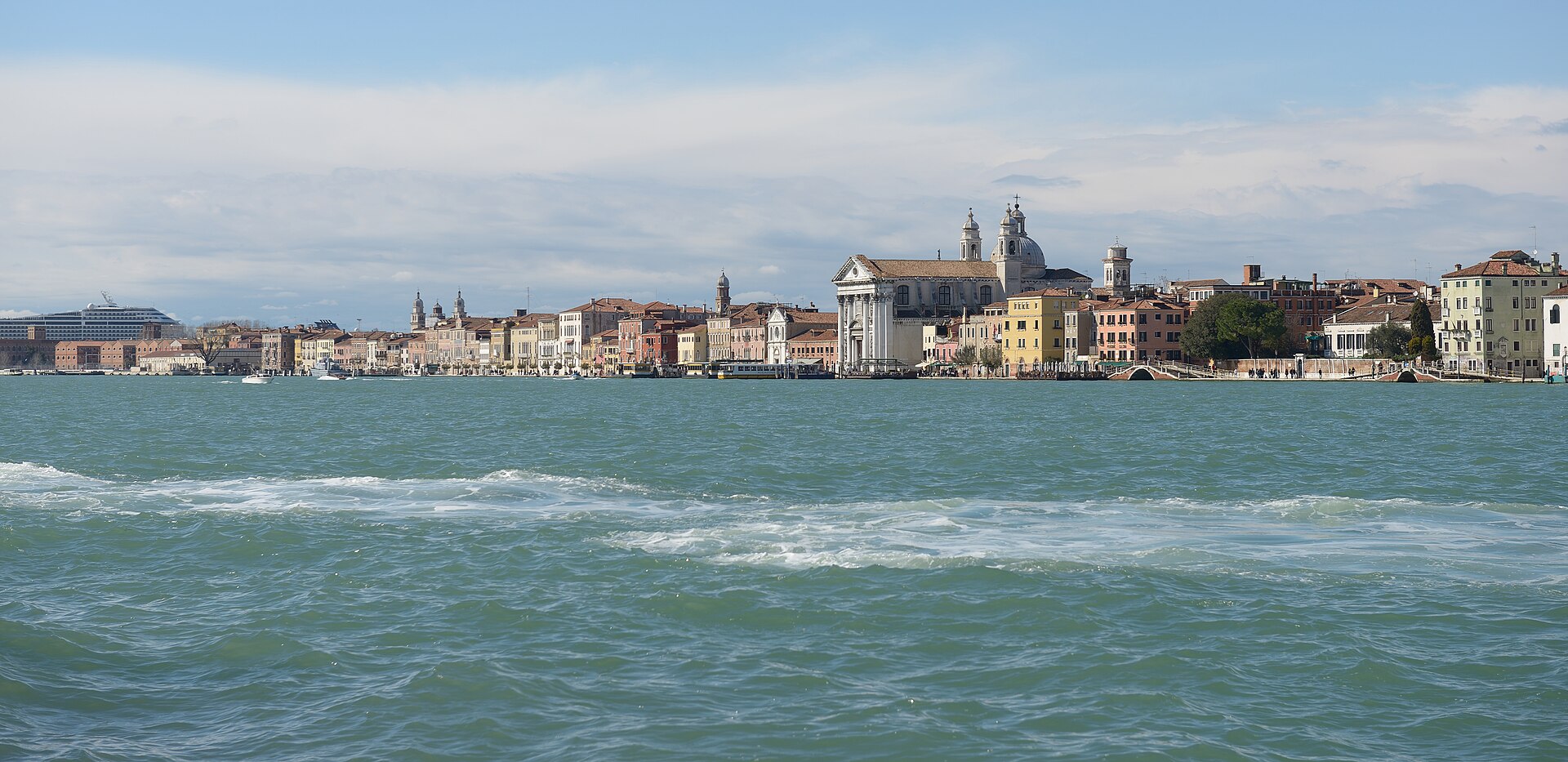
Lead image: The Giudecca canal, Venice. Photo: CC BY-SA 3.0 via Wikimedia Commons.