On 30 April 1895, King Umberto I and Queen Margherita walked through the Giardini di Castello in Venice to open an exhibition the city council had approved two years earlier as an “esposizione biennale artistica nazionale,” a national biennial art exhibition. By the time it opened, ambition had outgrown the name: the show went out under the title I Esposizione Internazionale d’Arte della Città di Venezia, the city’s first international art exhibition, and drew 224,000 visitors in its first run. It also produced Italy’s first proper art scandal, when Giacomo Grosso’s painting of a funeral attended by five nude women, Supremo Convegno, provoked public protest and condemnation from Venice’s own Patriarch before the show had even settled in.
That first edition set a pattern the Biennale has followed, with interruptions, for 131 years. Antonio Fradeletto, appointed the exhibition’s secretary general in 1894, ran the early editions and pushed them toward genuine international participation rather than an Italian showcase with foreign guests, inviting artists from across Europe to submit work for a jury to select. The exhibition returned every two years, war years excepted, and by the early 1900s had already outgrown the original Palazzo dell’Esposizione, the single building in the Giardini that had hosted the 1895 show, a period La Biennale’s own institutional history documents in detail. Other countries soon wanted permanent space of their own rather than borrowed rooms inside that one building.
A garden filling up with national pavilions
Belgium built the first freestanding national pavilion in the Giardini in 1907, designed by the architect Léon Sneyers, and the idea caught on quickly. Hungary and Germany both followed in 1909, alongside Great Britain the same year; France built its pavilion in 1912, and Russia in 1914. Each government designed and funded its own building and controlled what went inside it, a structure that gave the Giardini the unusual character it still has: a public park scattered with more than two dozen small national buildings, from the sober British pavilion to Russia’s ornate, Byzantine-inflected structure, each one representing an architectural statement about how that country wanted to present itself to the rest of Europe. New pavilions kept arriving through the twentieth century as more countries sought a permanent foothold, and by the time the Giardini filled up, nations without space of their own had to look elsewhere in the city for a venue.
1968: the year artists turned the paintings to the wall
The Biennale’s most disruptive year began in June 1968, when students and artists caught up in that year’s wider protests across Europe organised a sit-in intended to stop the exhibition opening at all. Authorities responded with overwhelming force: roughly 1,000 police and carabinieri, 600 members of the Celere riot police brought in from Padua, and two tanks stationed at the entrances, along with baton charges in St Mark’s Square and identity checks throughout the grounds. A number of participating artists sided with the protesters rather than the institution. Inside the French pavilion, the artist Nicolas Schöffer scrawled “chiuso,” closed, on a sheet of paper; the Swedish pavilion posted a notice refusing to open while police remained on site; and in the Italian pavilion, Gastone Novelli and others turned their own canvases to face the wall and wrote “La Biennale è fascista,” the Biennale is fascist, across the reverse. The Biennale went ahead, diminished, and the fallout was lasting: the jury system and the exhibition’s traditional Grand Prize were abolished afterward and not reintroduced for eighteen years.
The Arsenale opens its gates
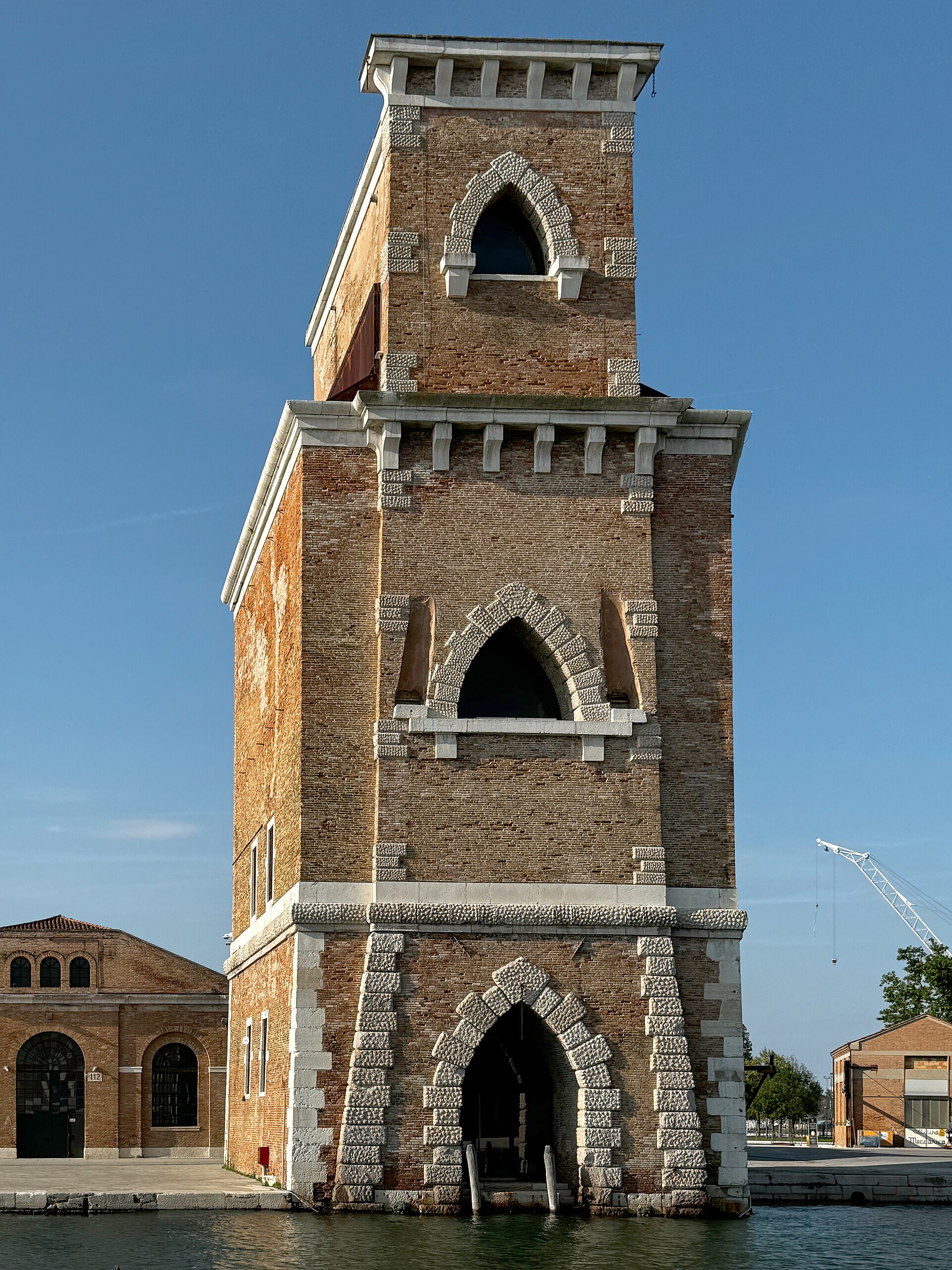
By 1980, the Biennale needed room the Giardini’s pavilions could no longer supply, particularly for the newly established architecture exhibition, the first Mostra Internazionale di Architettura, titled The Presence of the Past and curated that year by Paolo Portoghesi, whose Strada Novissima installation of postmodern facades was staged inside it. Part of the Arsenale, Venice’s historic state shipyard and armoury, was opened to the public as exhibition space for the first time, allowing installations at a scale the Giardini’s pavilions could never accommodate. The Arsenale’s vast Corderie, a rope-making hall built in 1303 and rebuilt between 1579 and 1585 to a design attributed to Antonio Da Ponte, architect of the Rialto Bridge, runs 317 metres long and 21 metres wide; it became one of the Biennale’s signature spaces and has hosted the international art exhibition’s main survey shows ever since, alongside the Giardini’s Central Pavilion.
The lion comes back
The Golden Lion, the Biennale’s best-known prize, took its current form in 1986, when it replaced the Grand Prize that had lapsed after 1968. Modelled on the winged Lion of St Mark, Venice’s civic symbol, the trophy today is awarded across several categories: Golden Lion for Best Participant in the international exhibition, Golden Lion for Best National Participation, Golden Lion for Lifetime Achievement, and a Silver Lion for a promising younger artist. There is no prize money attached; the honour alone has been enough to define careers.
Strangers everywhere, and what comes next
The 60th International Art Exhibition, held in 2024 under the Brazilian curator Adriano Pedrosa, the first Latin American to direct the exhibition, took as its title Stranieri Ovunque – Foreigners Everywhere, borrowed from a series of neon works by the Paris-based collective Claire Fontaine, and built its main survey around migrant, outsider, queer, self-taught and Indigenous artists largely excluded from earlier editions’ canon. Australia won the Golden Lion for best national participation with Archie Moore’s installation kith and kin, tracing 65,000 years of the Aboriginal artist’s family history across the pavilion’s walls in white chalk; the Golden Lion for best participant went to the Mataaho Collective, four Māori women artists, for a woven sculpture titled Takapau. Lifetime achievement lions went to the Paris-based Turkish artist Nil Yalter and the Brazil-based Italian artist Anna Maria Maiolino. According to La Biennale’s own figures, the edition closed having sold 700,000 tickets, its second-highest attendance on record.
The 61st International Art Exhibition, running from 9 May to 22 November 2026, carries its own difficult story. La Biennale had appointed the Swiss-Cameroonian curator Koyo Kouoh, the first Black woman to lead the exhibition, but she died suddenly in May 2025, months before the framework for her show was due to be unveiled. La Biennale’s board chose to proceed with the vision she had already developed, titled In Minor Keys, and an advisory team she had assembled, including Rasha Salti and Marie Hélène Pereira, presented it at a press conference in her place. The Giardini’s pavilions and the Arsenale’s Corderie will open under that title in May 2026, an exhibition built, unusually, around the absence of the person who conceived it.
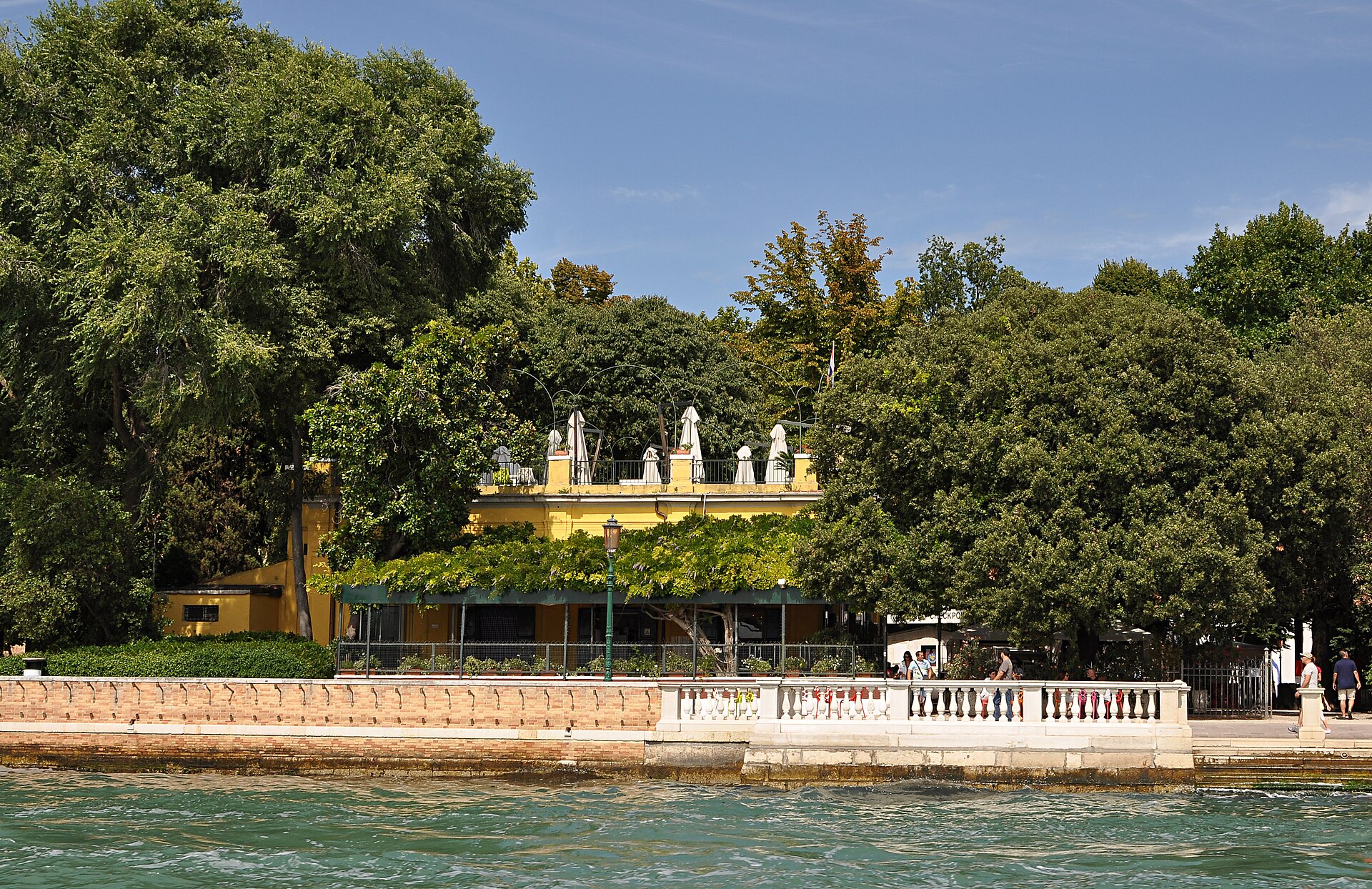
Lead image: The Giardini della Biennale, Venice, home to national pavilions built from 1907 onward.