Giorgio Morandi did not have a studio in the sense most painters mean it. At Via Fondazza 36 in Bologna, the flat he shared with his mother and three unmarried sisters from 1933 until his death in 1964, he worked in a room overlooking the internal courtyard, off the family’s living quarters, and visitors had to pass through the sisters’ bedroom to reach him at his easel. There, for three decades, he arranged and rearranged the same small collection of bottles, tins, boxes and jugs on a table pushed against the window. The flat survives today as part of Bologna’s Galleria d’Arte Moderna, opened to the public as a house museum, with many of those objects still standing where he left them.
Morandi was born in Bologna on 20 July 1890, the eldest of five children of Andrea Morandi and Maria Maccaferri, and enrolled at the city’s Accademia di Belle Arti in 1907. His three surviving sisters, Anna, Dina and Maria Teresa, lived with him and their mother at Via Fondazza for the rest of his life, and none of the three ever married. He never really left Bologna. Aside from brief travels, most of his working life was spent within a few streets of Via Fondazza and, from the early 1910s onward, in the hill village of Grizzana in the Apennines south of the city, where he found a landscape and a light he returned to on canvas for decades. He remained largely outside the international gallery circuit that made contemporaries famous abroad, giving only a single interview for publication in his lifetime.
Morandi did not arrive at his mature manner quickly. His student work absorbed Paul Cézanne, and through the 1910s he tried on Cubism, Futurism and, briefly and consequentially, the Pittura Metafisica associated with Giorgio de Chirico, painting still lifes around 1918 that combined unrelated objects, a pipe, a sculpted head, a bottle, chosen for shape rather than meaning. Earlier canvases from 1916 show the softened lines and muted tone of Giotto’s frescoes, which Morandi had studied closely; a 1920 composition shows the simpler geometry and brighter colour of Piero della Francesca instead. Only by the early 1920s did the searching stop, replaced by the narrow, repeating vocabulary of subdued objects that would occupy him for the remaining four decades of his career.
The same bottles, gathering dust
What Morandi painted, obsessively and almost exclusively from the 1920s onward, was a small rotating cast of ordinary household containers: wine bottles, tin boxes, ceramic jugs, a coffee pot, a few vases, some emptied of any label or function. He rearranged them by centimetres between sessions, shifting a bottle’s position relative to a box to change the composition’s internal geometry, then painted the same grouping in slightly different light or from a slightly different angle, sometimes returning to a near-identical arrangement years apart. He was notoriously particular about leaving the objects undisturbed between sessions and was said to object to having them dusted, so that a fine, even grey settled permanently over the glass and ceramic surfaces, muting their colour and matching the tonal restraint of the paintings themselves.
Teaching etching, not painting
Morandi supported himself for decades as a teacher rather than as a working painter, first giving elementary drawing lessons in Bologna’s schools from 1914, then holding the chair of etching, incisione, at the city’s Accademia di Belle Arti from 1930 until his retirement in 1956. He never taught painting formally, but his own printmaking, an important and separate strand of his work alongside the oils, used the same repertoire of bottles and boxes rendered through dense cross-hatching rather than colour. Former students and colleagues later described a teacher who was exacting about technique and largely silent about interpretation, consistent with the reticence that marked his public life generally.
A prize at the Biennale, a war in between
International recognition, when it came, arrived comparatively late. Morandi exhibited at the Venice Biennale as early as 1930, but it was in 1948, at the first postwar Biennale, that he won the exhibition’s prize for painting, a recognition that helped establish his reputation beyond Italy at a moment when the country’s cultural institutions were themselves being rebuilt. The years immediately before had been difficult: in June 1943, with the war closing in on the region, Morandi left Bologna as an evacuee for the house at Grizzana, where the critic Francesco Arcangeli later identified an especially productive run of landscapes and still lifes painted through 1942 and 1943. The 1948 prize marked a turning point in how his work was received, feeding into further institutional recognition through the 1950s, including the grand prize at the São Paulo Bienal in 1957.
Where the collection lives now
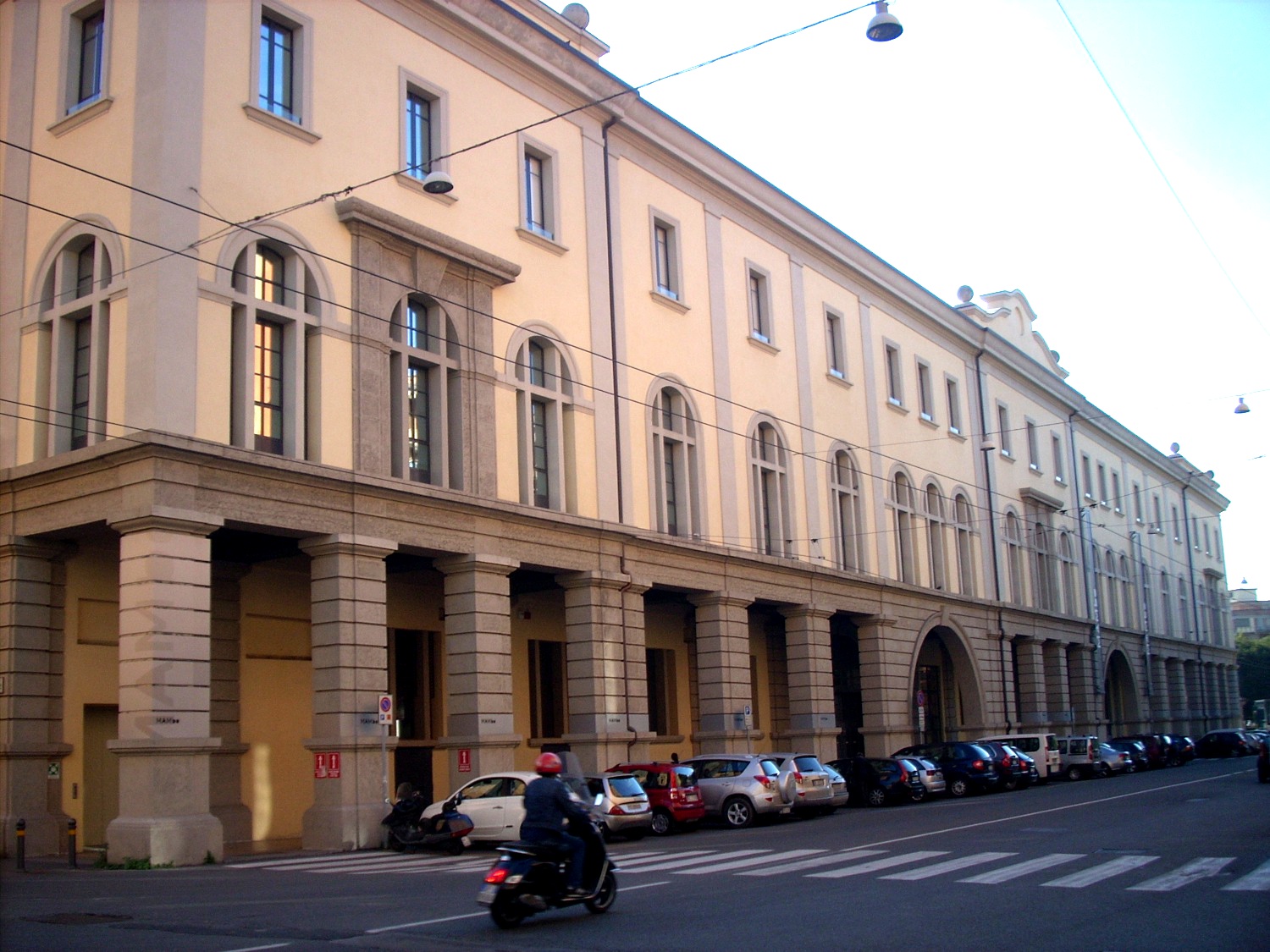
Bologna holds the largest public collection of Morandi’s work, built substantially around a donation from his sister Maria Teresa Morandi after his death. It was long housed at the Palazzo d’Accursio in the city centre, but in 2012, during renovation work there, the collection moved to MAMbo, the Museo d’Arte Moderna di Bologna, where it now occupies dedicated galleries alongside temporary exhibitions that put Morandi’s work in dialogue with later artists. The Via Fondazza flat itself, and the separate house in Grizzana, now renamed Grizzana Morandi in his honour, both operate as house museums open by appointment, preserving the rooms and objects much as Morandi left them.
A vocabulary later artists kept returning to
Morandi’s insistence on a narrow, repeated set of objects, painted with restrained colour and close tonal control, became a reference point well beyond painting. Around 1989 and 1990, some two decades after Morandi’s death, the photographer Luigi Ghirri was given access to the still-preserved studio at Via Fondazza and produced a series of colour photographs of the room and its objects exactly as Morandi had left them, images that have since been exhibited alongside Morandi’s own paintings in Bologna as a study in how one artist’s way of looking could be inherited by another working in a completely different medium. MAMbo’s temporary programming around the Morandi collection has continued in a similar vein, repeatedly pairing his still lifes with contemporary artists exploring the same reduced, contemplative territory.
The muted bottles on Via Fondazza, still faintly dusty in photographs of the preserved studio, remain the clearest evidence of how narrow a subject Morandi needed and how long he was willing to keep looking at it. The flat, the etching chair at the Accademia and the Grizzana house together map a career spent almost entirely within a fifty-kilometre radius, built on the conviction that a bottle looked at closely enough for forty years still had more to give.
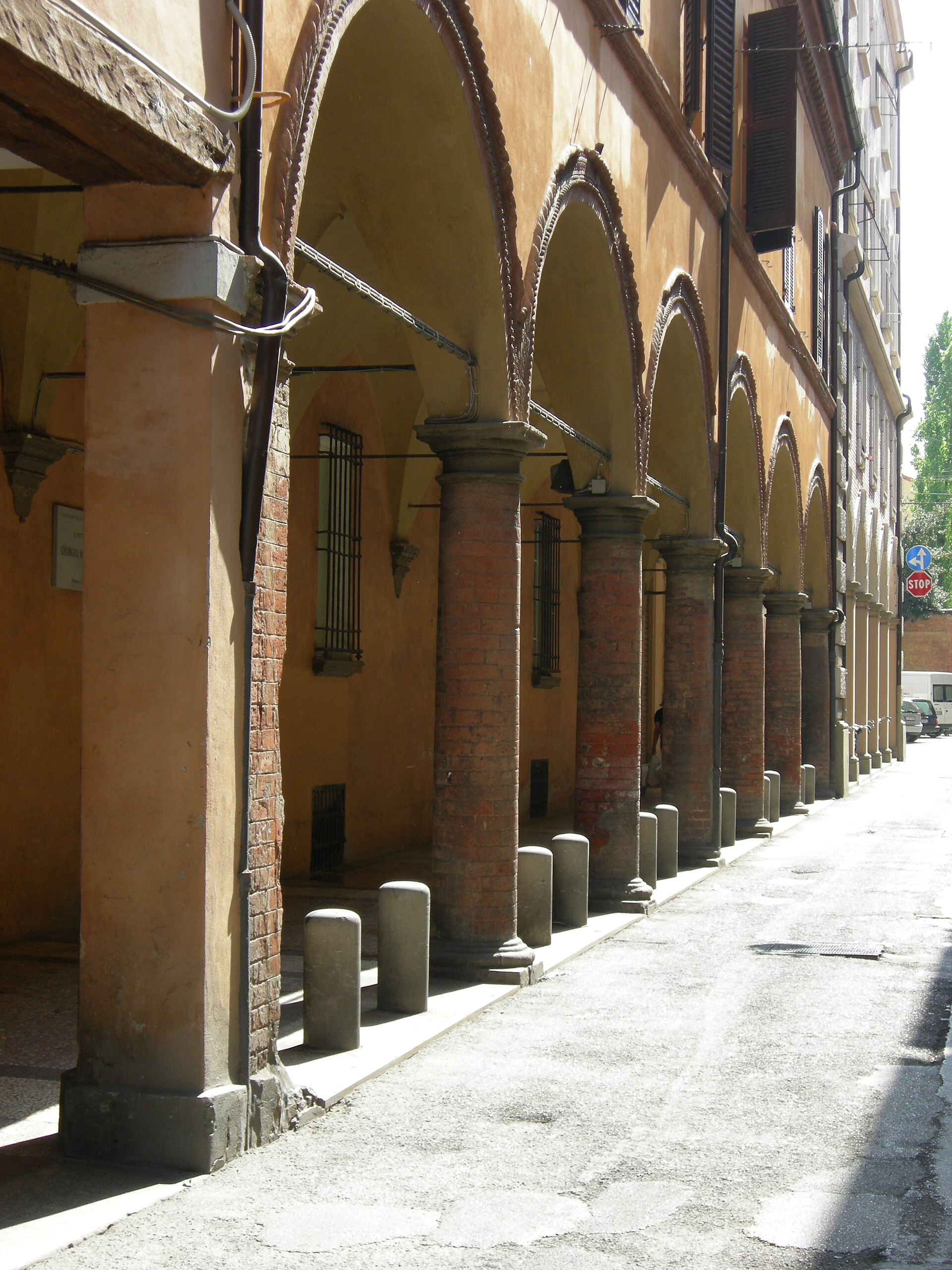
Lead image: Via Fondazza, Bologna, where Morandi’s flat and studio at number 36 is preserved as a house museum.