In 1852 Leopoldo Alinari opened a photographic studio in Florence, then still an independent Tuscan capital seven years from becoming, briefly, the seat of a unified Italian government. He was soon joined by his younger brothers Giuseppe and Romualdo, and the firm they built, Fratelli Alinari, is still trading today, a claim that lets it call itself the oldest company in the world operating continuously in photography.
The brothers worked in the technical idiom of their moment: wet collodion glass-plate negatives, coated and exposed while still damp, then printed out on paper coated with egg-white albumen, which gave the prints their characteristic warm brown tone and fine detail. It was slow, exacting work — plates had to be prepared, exposed and developed within minutes, which meant a portable darkroom, often a covered cart or a tent, travelling with the photographer to every cathedral, cloister and gallery he shot. A single view of a facade or an altarpiece could take an entire morning to set up and expose correctly, long before the picture itself was made.
By 1860 the brothers had photographed members of the Italian royal family, a commission that did much to establish the young firm’s respectability at a moment when photography was still regarded by many as a mechanical trade rather than a serious profession. Their business expanded accordingly, adding landscape views, portraiture and studies of regional costume to the core work of recording art and architecture, and Fratelli Alinari became the first photographic firm granted regular access to photograph inside the Vatican Museums and the Louvre, alongside numerous Italian civic and ecclesiastical collections.
Photographing a nation’s art before it existed as a nation
From the outset the Alinari brothers set themselves a task distinct from the portrait studios and tourist-view photographers who were their contemporaries: the systematic photographic recording of Italian painting, sculpture, architecture and monuments. They photographed the Uffizi’s paintings, the sculpture of the Bargello, the facades and cloisters of Florence, Rome, Venice and beyond, building a visual catalogue of an artistic heritage that, in the 1850s and 1860s, belonged to a patchwork of separate states rather than a single Italy.
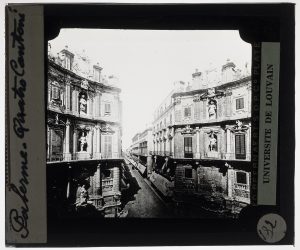
That catalogue became indispensable well beyond Italy’s borders. Through the second half of the nineteenth century and into the twentieth, Alinari photographs were reproduced as lantern slides and study prints and bought in bulk by museums, publishers and university art-history departments across Europe and the United States, who had no other reliable way to show students what a fresco in Assisi or a doorway in Siena actually looked like. For generations of students who never travelled to Italy, an Alinari print was Italian art.
A firm that outgrew its own founders
Leopoldo died in 1865 and Giuseppe took over the business, later joined by his son Vittorio, who expanded the archive through acquisitions of other photographers’ negatives as well as the firm’s own continuing production. By the twentieth century Fratelli Alinari had accumulated an archive that today stands at more than five and a half million original images, spanning the entire history of photography from early daguerreotypes to twentieth-century reportage, alongside the firm’s own negatives on glass and, later, film.
The firm changed hands several times across the twentieth and early twenty-first centuries, passing through periods of private ownership while its historic negatives remained the core of its value even as the company’s commercial photography business struggled to keep pace with changing technology. By the late 2010s the company was in serious financial difficulty, and in 2019 it lost the lease on its long-standing Florence premises, raising a real prospect that one of the most significant photographic collections anywhere in the world might be broken up and sold to private buyers, item by item, rather than kept intact.
The archive becomes public property
Rather than see the collection dispersed or sold piecemeal, the regional government of Tuscany stepped in. On 19 December 2019 Regione Toscana formally acquired the Alinari photographic patrimony, moving one of the world’s most important private photographic archives into public ownership. The following year, on 16 July 2020, the region established the Fondazione Alinari per la Fotografia (known as FAF Toscana) to manage, conserve and make accessible the collection on a permanent basis.
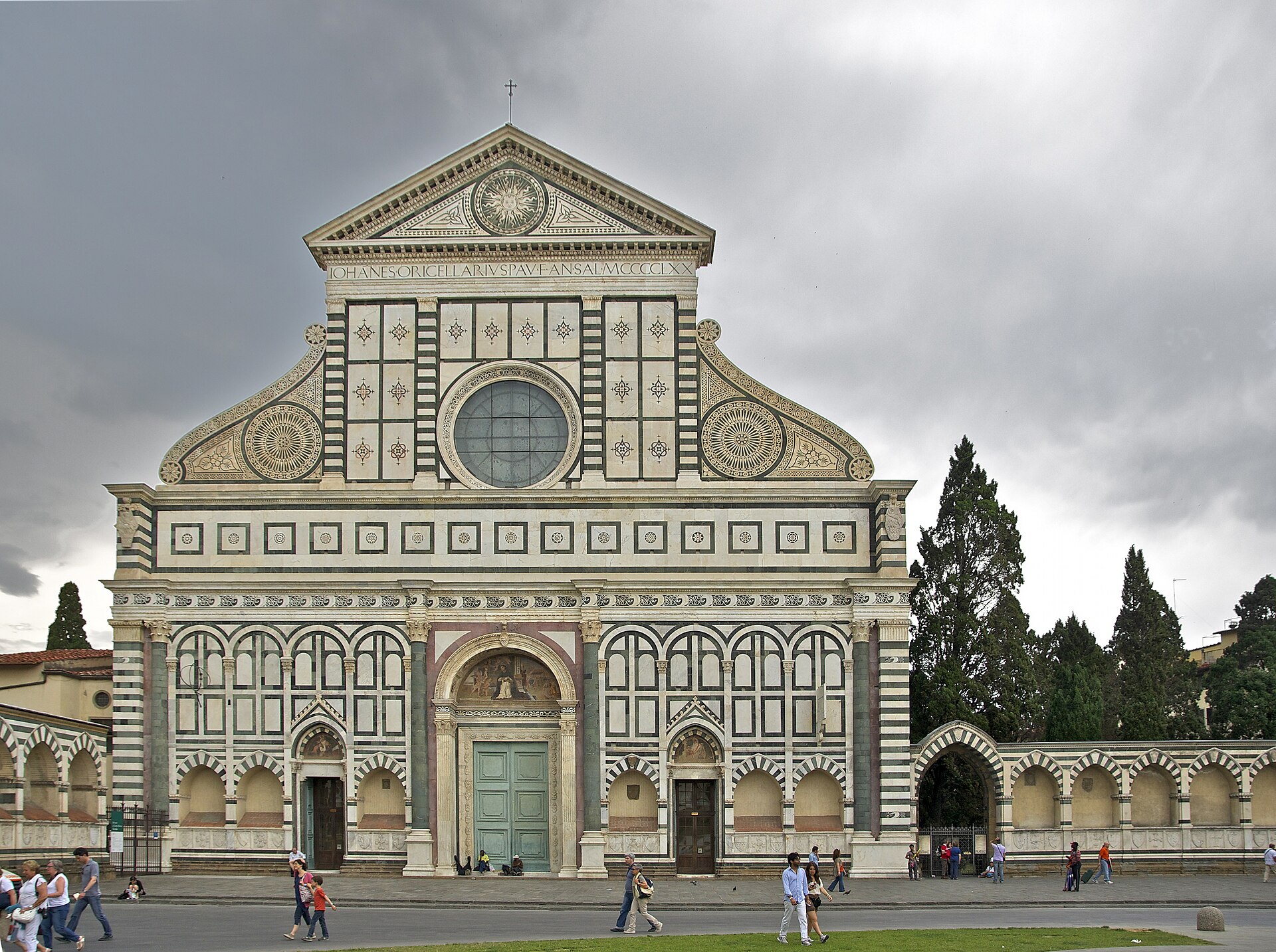
The foundation has since been developing a new home for the archive and a public museum, a project that has itself changed course more than once. An earlier plan had proposed housing the collection at the nineteenth-century Villa Fabbricotti, on the northern edge of central Florence, but in January 2024 Regione Toscana confirmed that the new Museo Alinari would instead be built within the historic Santa Maria Novella complex, close to the city’s main railway station and one of Florence’s most visited religious sites in its own right. The archive’s negatives, prints and glass plates remain in Florence under the foundation’s care while the museum project is developed, and specialist conservators continue the slow work of stabilising material that in some cases is now well over a century and a half old.
The scale of that conservation task is difficult to overstate. Glass negatives are fragile and irreplaceable; a cracked plate cannot be printed from again, and early collodion emulsions can deteriorate visibly if stored at the wrong temperature or humidity. Public ownership under FAF Toscana was intended above all to guarantee that this material would be conserved to professional archival standards indefinitely, rather than left dependent on the finances of a single private company, as had been the case for much of the twentieth century.
What survives of the founders’ method
The wet collodion process the Alinari brothers used was already technically obsolete within a few decades of the firm’s founding, replaced by dry gelatin plates and then film. What has outlasted the chemistry is the ambition behind it: a belief that a nation’s art could and should be recorded exhaustively, plate by plate, and made available to anyone who could not stand in front of the original. That ambition shaped how art history was taught for a century before digital photography made comprehensive image libraries commonplace.
Visitors to Florence today can already see fragments of that legacy in exhibitions the foundation mounts from the archive, ahead of the fuller museum planned for Santa Maria Novella. The five and a half million images themselves, the paintings, palazzi, street scenes and portraits three brothers and their successors gathered over a century and a half, remain in the city where the enterprise began in 1852. Researchers, publishers and museums can already request reproductions from the collection through the foundation, so the firm’s original nineteenth-century purpose, supplying an accurate visual record of Italian art to people who could not see it in person, continues in practice even though the company that pioneered it no longer exists as an independent business.
Once the Santa Maria Novella conversion is complete, Florence will have a dedicated public home for the collection for the first time since the firm’s own historic premises closed in 2019. Until then, the negatives that recorded a nation’s art before it had fully become a nation sit catalogued in storage a short walk from where Leopoldo Alinari first opened his studio.
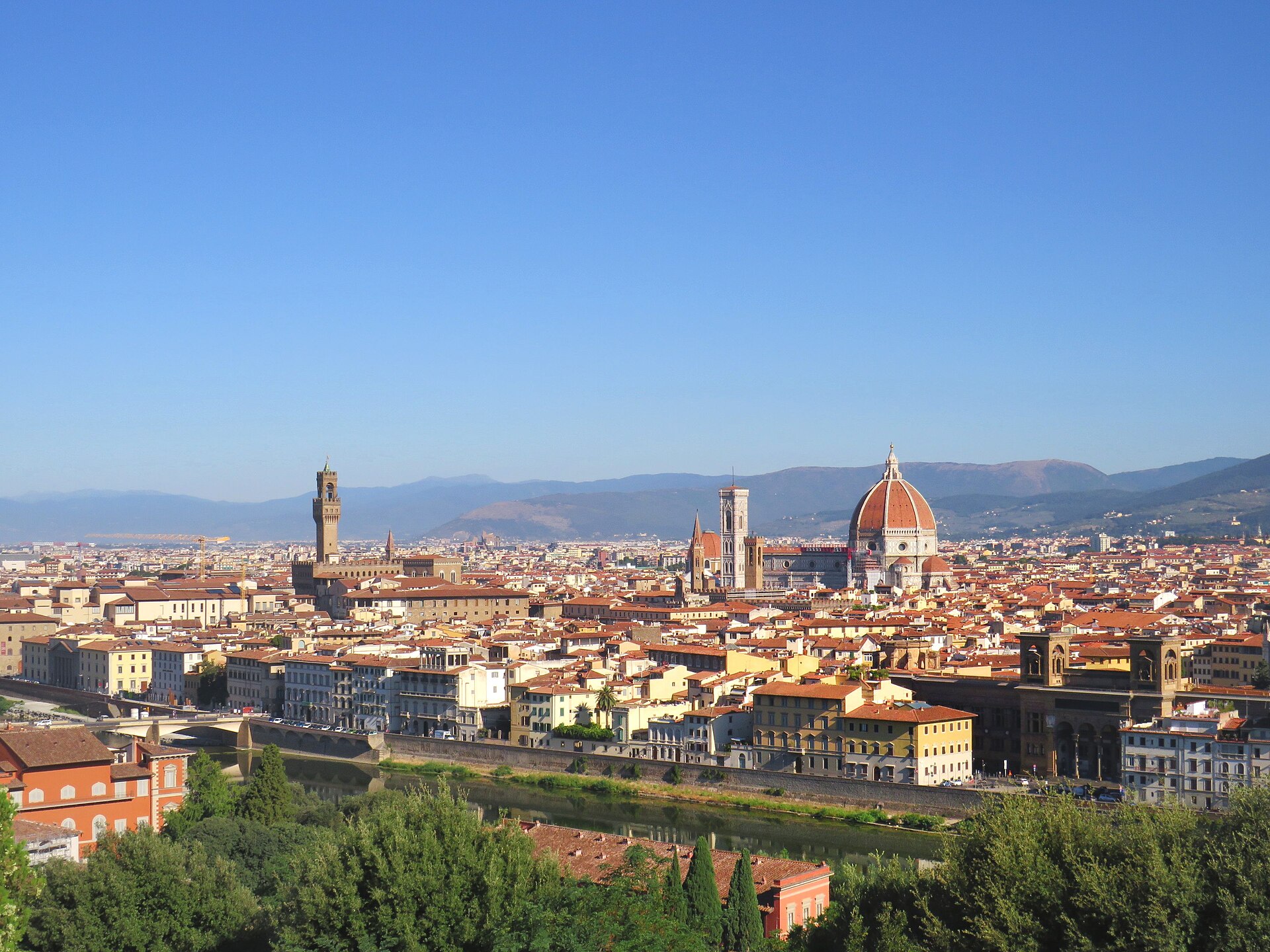
Lead image: Santa Maria Novella, Florence. The Alinari brothers photographed the city’s monuments systematically from 1852. Photo: public domain via Wikimedia Commons.