Letizia Battaglia picked up a camera seriously only after her divorce, in 1971, when she was thirty-six, using photographs at first simply to illustrate articles she was writing for a Sicilian newspaper. Three years later, at forty, she joined L’Ora, the left-wing Palermo daily, as its photography director, working alongside her younger colleague and long-time partner Franco Zecchin. She would remain at the paper until it closed in 1992, and in that span she became the person most often standing over a body on a Palermo street with a camera, called out at any hour of the day or night to record what the Mafia had done.
She was, by her own account and by the account of colleagues, one of very few women working as a press photographer anywhere in Italy at the time, let alone in Sicily, arriving at crime scenes usually run by men, both the police and the other photographers, and holding her ground there for two decades. She shot almost exclusively in black and white on a manual camera, a technical choice that also became an aesthetic one: the stark contrast of unretouched monochrome, she argued, gave even the most brutal images a kind of severity rather than sensationalism.
Battaglia photographed almost every major crime scene in the city through the 1970s and 1980s, the years of the Second Mafia War and the assault on the Italian state that followed it, including the murders of investigating magistrates, police officials and ordinary citizens caught in the violence. She and her colleagues built what she later called an archive of blood: across roughly two decades at L’Ora, her negatives and prints came to number around 600,000 images, the great majority never published, filed away in the newspaper’s offices and later in her own care.
An archive that became evidence
Battaglia’s photographs did more than record violence for the newspaper’s readers; they became legal evidence. When prosecutors indicted the former prime minister Giulio Andreotti in 1993 on charges of association with the Mafia, investigators searched her archive and found two photographs from 1979 showing Andreotti in the company of Nino Salvo, a prominent Sicilian mafioso whose acquaintance Andreotti had publicly denied. Aside from the testimony of Mafia informants who had turned state’s witness, these images were among the only physical documentation connecting the politician to organised crime, and they were entered into the trial record. The Andreotti case became one of the longest-running and most closely watched criminal proceedings in modern Italian history, and Battaglia’s negatives, kept for over a decade without any expectation they would ever be used this way, turned out to be part of the country’s official reckoning with the reach of the Mafia into national politics.
Faces that were not corpses
Battaglia insisted, across decades of interviews, that the murder photographs were never the whole of what she wanted her camera to do. Alongside them she built a second, much larger body of work: portraits of Palermo’s girls and young women, its street processions, its markets and its poverty, made as a deliberate counterweight to the archive of blood. She photographed children playing among rubble, brides, nuns, prostitutes and psychiatric patients with the same close, unguarded attention she brought to crime scenes, arguing that the city’s dignity and its violence had to be shown together or the record was incomplete. Many of these images were made in the same working-class neighbourhoods, the same crumbling courtyards and narrow streets, where the murders she also photographed had taken place, so that her two bodies of work amount to a single sustained portrait of one city seen from two directions at once.
From the darkroom to the city council
Battaglia’s engagement with Palermo was not limited to photography. She served on the city council in the late 1980s as a member of the Green Party and later as an assessor in the administration of the reforming mayor Leoluca Orlando, part of the period when the city government moved to reclaim public space from Mafia influence and begin restoring the historic centre. She went on to serve in the Sicilian Regional Assembly for the party La Rete in the early 1990s, and remained an outspoken environmental campaigner for the rest of her life, opposing development projects she believed threatened Sicily’s coastline and countryside. That later activism grew directly out of the same instinct that had sent her out to photograph crime scenes decades earlier: a conviction that Palermo’s problems, whether organised crime or unchecked construction, needed to be named publicly rather than tolerated in silence. She also founded a small publishing house, Edizioni della Battaglia, and co-founded the feminist magazine Mezzocielo, which gave a platform to Sicilian women writers largely absent from the mainstream press.
A school built inside a former foundry
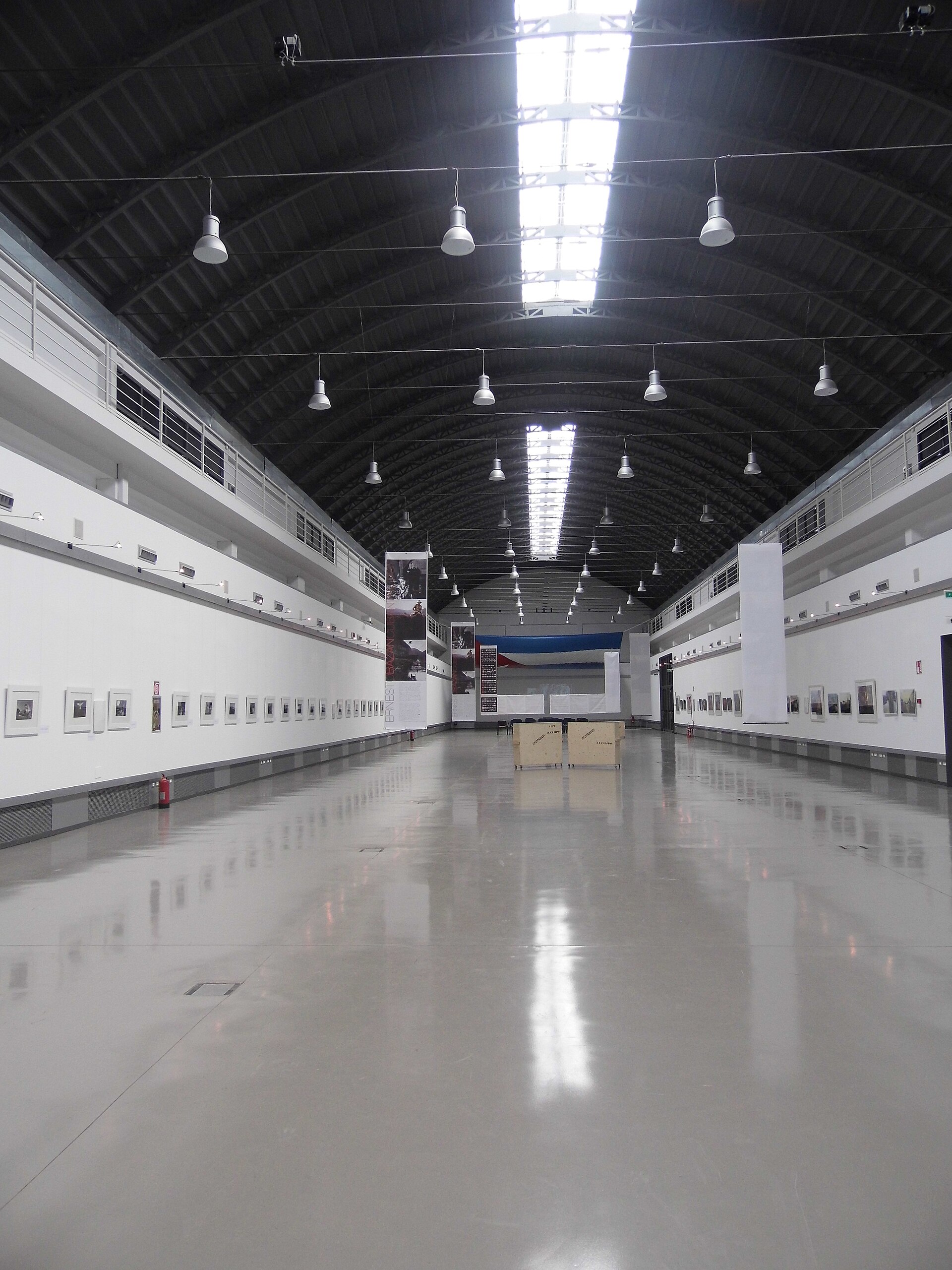
In 2017 Battaglia opened the Centro Internazionale di Fotografia (International Centre of Photography) inside the Cantieri Culturali alla Zisa, a converted nineteenth-century industrial complex in Palermo that once housed metalworking foundries and had by then become one of the city’s principal cultural venues. The centre combined a museum space for her own archive and touring exhibitions with a working photography school, reflecting her long-standing conviction that Palermo needed to train its own photographers rather than simply be photographed by outsiders. She directed the centre personally into her final years, treating it as the practical continuation of a career that had always mixed image-making with public institution-building, from a city council seat to a magazine to, finally, a school.
Death in Cefalù and a documentary record
Battaglia died on 13 April 2022 in Cefalù, on the Sicilian coast east of Palermo, at the age of eighty-seven, after a long illness. Her career had by then been the subject of the 2019 documentary Shooting the Mafia, directed by Kim Longinotto, which drew on her archive to trace the arc from the worst years of Mafia violence to the state’s slow reassertion of control over Palermo. She had received international recognition for her work over several decades, including the W. Eugene Smith Grant for Humanistic Photography in 1985 and the Cornell Capa Infinity Award from the International Center of Photography in 2009.
The Centro Internazionale di Fotografia at the Cantieri Culturali alla Zisa continues to operate as both gallery and school, and Palermo’s public spaces still carry her photographs in periodic exhibitions. A city she once documented largely through its dead now draws on her much larger record of the living, the girls, brides, market stallholders and street processions she insisted on photographing alongside the corpses, to tell a fuller version of its own recent history.
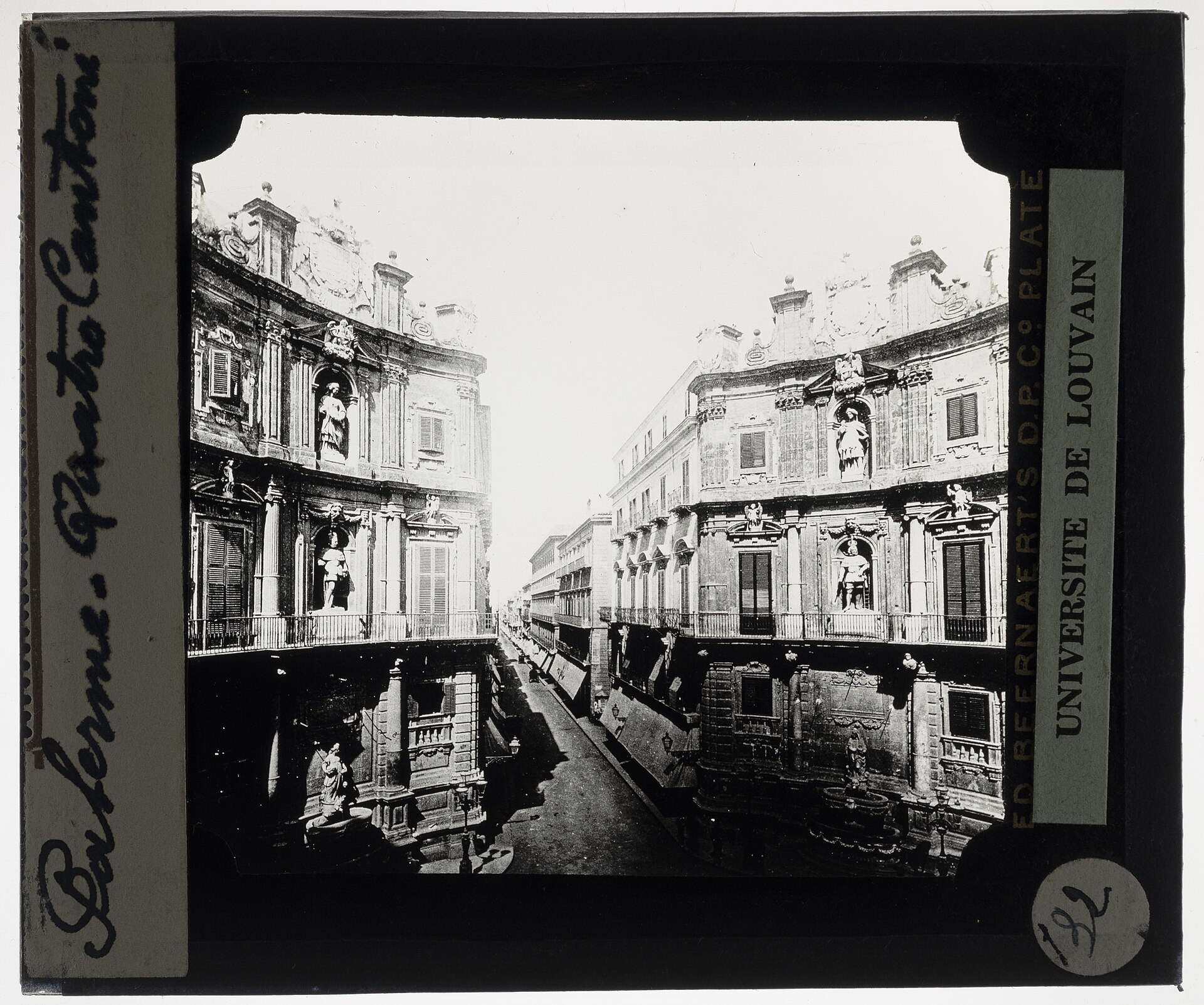
Lead image: The Quattro Canti, Palermo. Photo: public domain via Wikimedia Commons.