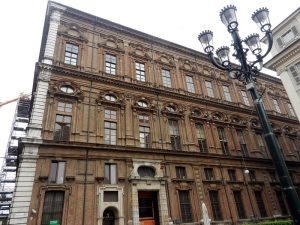
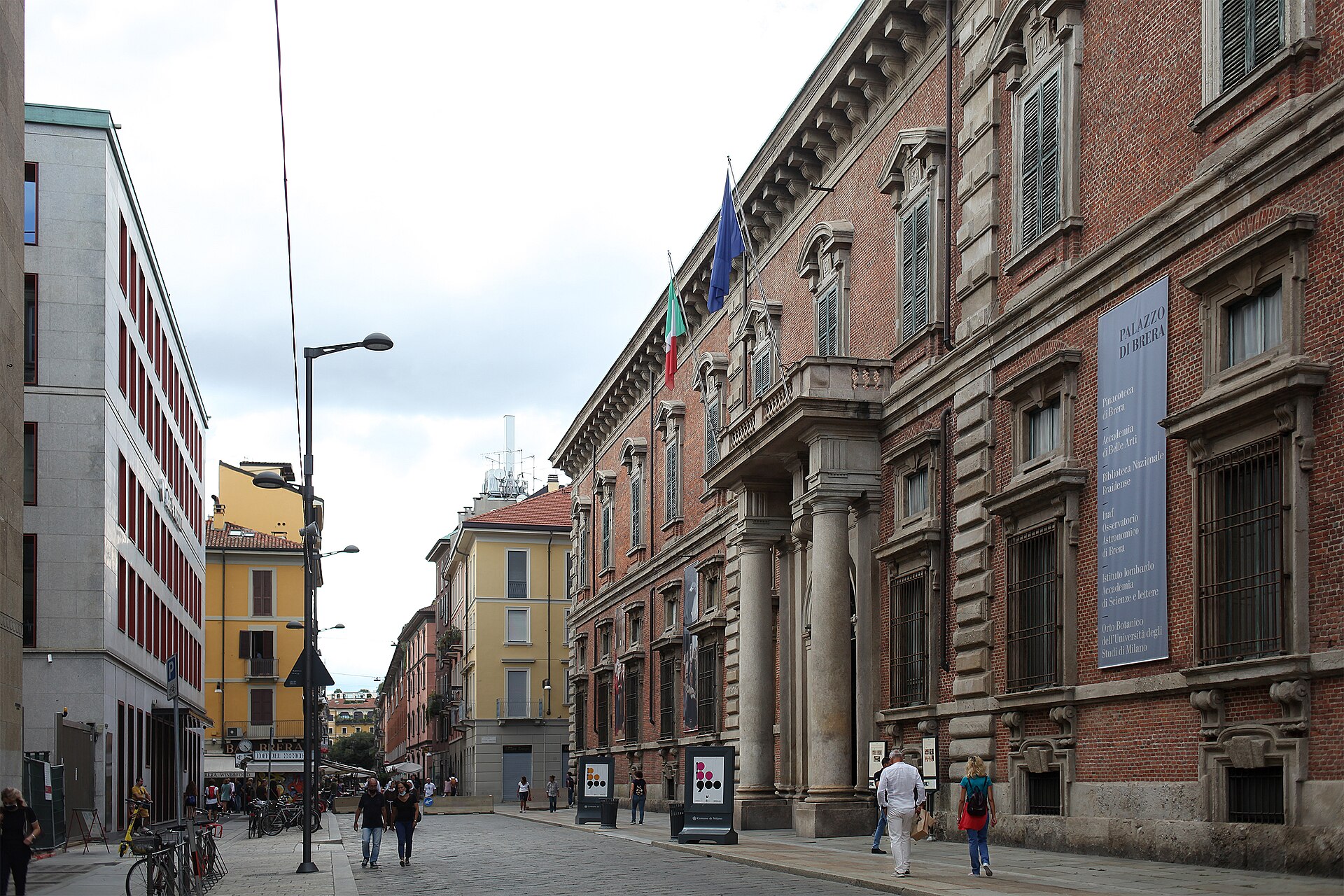
On 7 December 2024, Milan’s feast day for its patron saint Ambrose, the doors of Palazzo Citterio finally opened to the public. The eighteenth-century palazzo sits directly opposite the Pinacoteca di Brera on via Brera, close enough that the two buildings could pass for one institution, which is precisely the point. Planning to join them began in 1972, when the state bought the palazzo at the request of the Pinacoteca’s then director, Franco Russoli, who wanted a home for modern art next to the old master collection across the street. It took fifty-two years, two abandoned architectural schemes and one architect’s death to get there, a delay long enough that the palazzo’s opening was covered, in the end, as much for finally happening as for what it actually contained.
What opened that December was not a side project but the last piece of an idea known in Milan simply as the Grande Brera, the “Great Brera”: a single cultural complex uniting the picture gallery, the modern collection, the Braidense national library, an astronomical observatory and a botanical garden, all reached from the same courtyard. The Pinacoteca itself was never meant to work this way. It began as a teaching aid.
A gallery built from suppressed churches
The Brera collection owes little to any single patron’s taste. An art collection had existed at the site since 1776, when Empress Maria Theresa authorised the Accademia di Belle Arti to keep study pieces on hand for students, but the Pinacoteca in anything like its current form is a product of Napoleonic administration. As French forces pushed through northern Italy, the new government dissolved religious orders across Lombardy and the Kingdom of Italy, and hundreds of altarpieces and devotional paintings confiscated from suppressed churches and convents were funnelled into Brera for safekeeping and display. The gallery Napoleon opened to the public on his own birthday, 15 August 1809, was assembled by state decree rather than by connoisseurship, which is why its rooms are still dominated by large-scale religious commissions rather than the cabinet pictures typical of a princely collection. Officials in Milan, then capital of the Napoleonic Kingdom of Italy, treated the Accademia’s gallery as a regional showcase to rival the Louvre, drawing altarpieces not only from Lombard churches but from convents as far off as the Marche and Emilia, which is why Brera’s holdings range so widely across Italian regional schools rather than concentrating on Milanese painters alone.
Two altarpieces that outgrew their churches
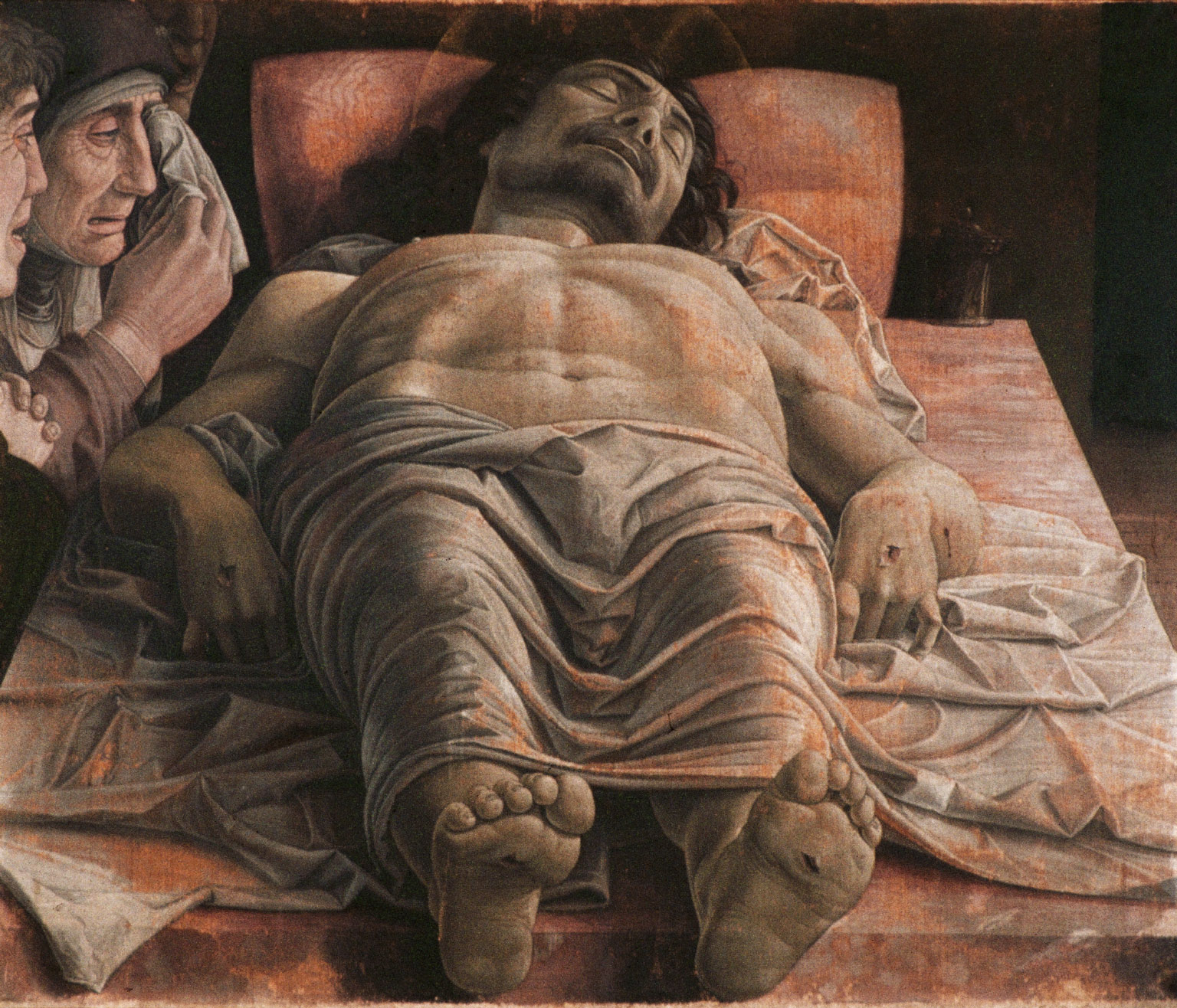
Among the confiscated works, two have never lost their claim on visitors. Andrea Mantegna’s Lamentation of the Dead Christ, painted in the early 1480s, shows the body on a marble slab viewed feet-first, an angle so aggressively foreshortened that the wounds in Christ’s hands sit almost level with his face. Mourned by the Virgin, John and Mary Magdalene crowded into the frame’s edge, it stayed in Mantegna’s own studio in Mantua until his death in 1506, when it passed to the Gonzaga family, who ruled the city. The panel was later stolen from Mantua, entered the Roman collection of Cardinal Mazarin, and eventually reached Milan through the Bossi family, who sold it into the Pinacoteca in the early nineteenth century, well outside the wave of Napoleonic confiscations that filled most of the gallery’s other rooms.
Piero della Francesca’s Brera Madonna, painted around 1472 to 1474 for Federico da Montefeltro, Duke of Urbino, shows the Virgin enthroned beneath a coffered apse with the Duke himself kneeling in armour at the lower right, an unusual insertion of a living patron into a sacred scene. An ostrich egg hangs on a thread from the shell-shaped dome above her head, read variously as a symbol of fertility, resurrection and the Montefeltro family’s own heraldic emblem. Napoleon’s officials deposited the panel at Brera, where it has remained ever since. For much of the nineteenth century the painting hung under a mistaken attribution to the minor painter Fra Carnevale, its surface dulled by old varnish; only later cleaning and scholarship restored it to Piero della Francesca, whose few surviving works are now scattered across museums from Urbino to London.
Fifty years, two collections and one broken plan
The modern wing that finally materialised at Palazzo Citterio rests on two twentieth-century gifts: the Jesi collection, donated in 1976, and the Vitali collection, given in 1984, together bringing around two hundred works by Picasso, Boccioni, Modigliani and Giorgio Morandi into Brera’s holdings, among them Picasso’s 1942 Head of a Bull, assembled from a bicycle seat and handlebars, and Umberto Boccioni’s 1910 Rissa in Galleria, a Futurist street brawl painted the same year the movement’s founding manifesto appeared. British architect James Stirling won the commission to convert the palazzo in the 1980s, designing partly subterranean galleries intended to link the building directly to the Pinacoteca’s own courtyard. Stirling died in 1992 with the project barely under way, and it stalled for decades afterward, revived and shelved under successive administrations. A €23 million renovation completed in 2018 still left the building unusable, undone by rising damp that made the rooms unfit to hang paintings in. Each failed attempt left the palazzo further behind the rest of the Grande Brera plan, to the point where generations of Milanese art students grew up walking past a shuttered building they were told, vaguely, would one day hold the museum’s modern collection.
What finally got built
The version that opened in 2024 was a more modest rescue than Stirling’s original vision, but it delivered what five decades of planning had promised: proper galleries for the Jesi and Vitali paintings, spaces for temporary exhibitions, and a physical connection to the rest of the Grande Brera complex. Angelo Crespi, a writer and cultural manager appointed director of the Pinacoteca di Brera in December 2023, took charge of the complex a year before the Citterio opening and now oversees the combined institution. He has pushed for private sponsorship to fund the museum’s next phase, arguing that partners outside the state are essential to the complex’s continued growth, and continues to hold the post.
Visitors today can walk from Mantegna’s Christ and Piero della Francesca’s Madonna in the old Pinacoteca, across via Brera, and into rooms hung with Picasso and Boccioni at Palazzo Citterio, a route that Franco Russoli first proposed more than half a century before anyone could actually make the crossing. The complex still stops short of the observatory, library and botanical garden that the fullest version of the Grande Brera plan envisaged sharing a single entrance, but for the first time since 1972 the two buildings at the heart of the idea function as one address rather than two.
Lead image: The Palazzo di Brera in Milan, home to the Pinacoteca since the Napoleonic era.