In 1824, King Carlo Felice of Sardinia paid 400,000 lire for a private collection assembled two decades earlier by Bernardino Drovetti, a Piedmontese lawyer who had risen to become Napoleon’s consul general in Egypt. Drovetti had used his position and a network of agents, among them the sculptor Jean-Jacques Rifaud, to gather more than 5,000 objects: statues from Karnak, sarcophagi, papyri, stelae and mummies, shipped back to Turin over years of digging and dealing across a country then only loosely policed. He competed directly for sites and dealers with Henry Salt, Britain’s consul general in Cairo, a rivalry that scattered material from the same tombs between what became the collections of Turin, London and Paris. Carlo Felice’s purchase, over the objections of his own finance ministry, created what is now recognised as the oldest museum in the world devoted solely to ancient Egypt, formally established that year and named the Royal Museum of Antiquity and Egypt when its first catalogue, compiled by curator Giulio Cordero di San Quintino, was completed in 1832.
Two centuries later, in 2024, the Museo Egizio marked that bicentenary with the most extensive rebuilding of its galleries since the 1930s, unveiling a redesigned Gallery of the Kings by the Rotterdam architecture firm OMA and continuing a broader renovation that has steadily changed how visitors move through the building over the past decade. The collection Drovetti sold almost by chance has grown, through excavation and diplomacy, into more than 40,000 artefacts, and the institution around it is still, visibly, under construction.
An intact tomb no thief had ever found
The museum’s single richest acquisition after Drovetti came not through purchase but excavation. Ernesto Schiaparelli, the museum’s director from 1894, led seasons of fieldwork at Deir el-Medina, the workers’ village on the Theban west bank that housed the artisans who built the Valley of the Kings’ royal tombs. In 1906 his team found the tomb of Kha, an official who oversaw construction projects under three pharaohs, and his wife Merit, undisturbed since it was sealed roughly 3,400 years earlier. Furniture, linen, cosmetics, food offerings, jewellery and Kha’s own writing implements survived intact, giving Turin a domestic snapshot of New Kingdom life that royal tombs, almost always robbed within decades of burial, could never provide. Among the more personal finds was Merit’s own wig, made from human hair and still dressed in the style fashionable in her lifetime, along with the couple’s bed, stools and a wooden chest holding folded linen garments. The tomb’s full contents were transferred to Turin as a single group and remain the museum’s most complete non-royal burial assemblage anywhere in the world.
A temple saved from a rising lake
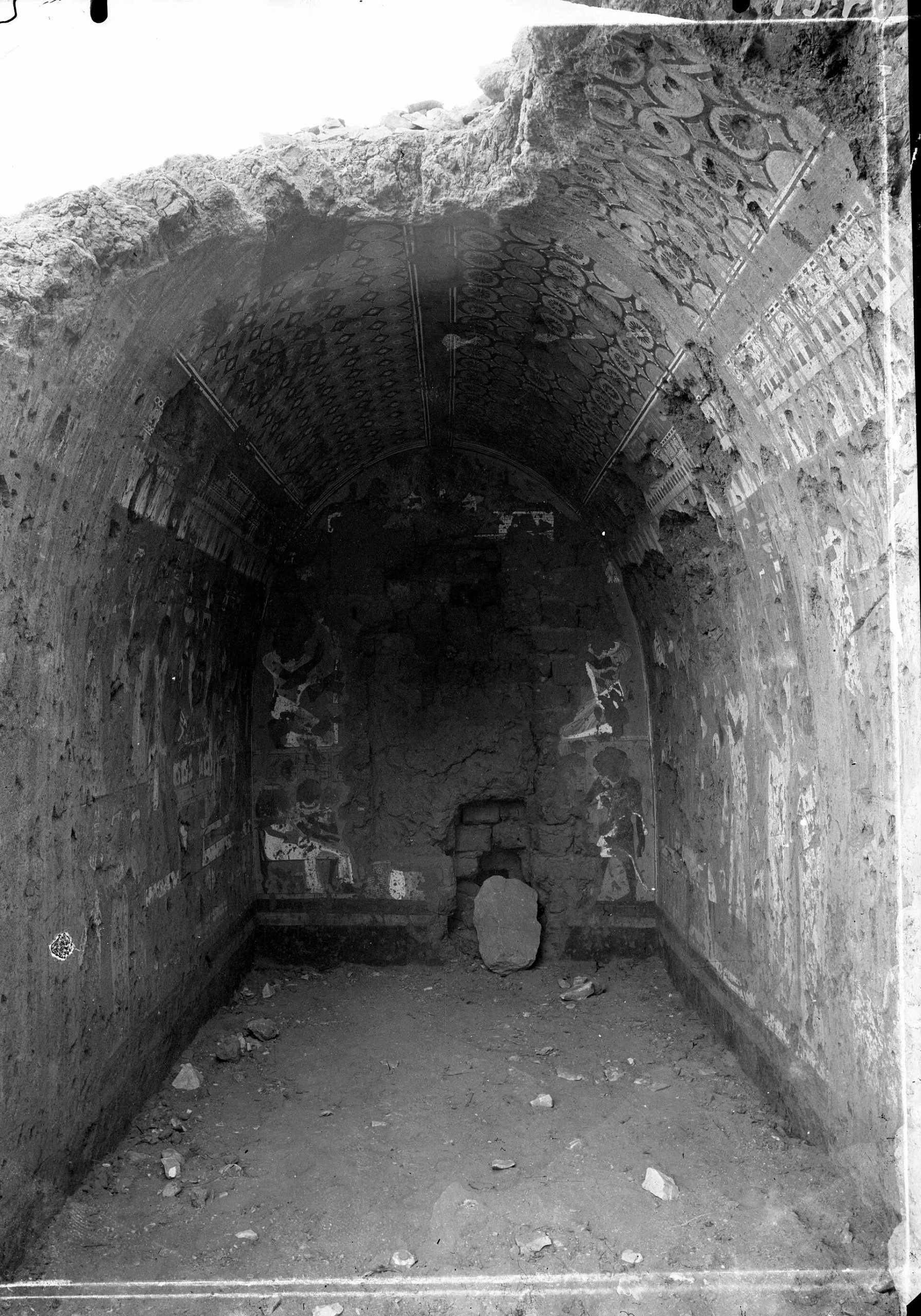
Not every object in Turin arrived through excavation or acquisition. The small rock-cut chapel of Ellesiya, carved directly into a sandstone cliff in Nubia under Pharaoh Thutmose III around 1430 BCE, faced destruction in the 1960s when the construction of the Aswan High Dam threatened to submerge dozens of ancient monuments, among them the far larger temples of Abu Simbel and Philae, under the rising waters of what would become Lake Nasser. UNESCO coordinated an international rescue campaign, and Egypt, in gratitude for Italy’s contribution to the effort, presented the entire rock-cut temple to Turin as a gift, sawn from the cliff face and reassembled inside the museum. It remains one of only a handful of complete ancient Egyptian temples standing outside Egypt.
Rebuilding the museum around its own history
The Museo Egizio’s modern layout dates to 1 April 2015, when a renovation designed by Turin-based Migliore+Servetto Architects reopened the museum after a three-year closure, arranging the collection chronologically across four floors instead of the older, more static room-by-room display. That 2015 project set the institution’s current identity as a research-driven museum with open storage and extensive object labelling, run since 2014 by director Christian Greco, an Egyptologist trained in classical literature and previously a curator at Leiden’s Rijksmuseum van Oudheden, who has continued to hold the post through the bicentenary and into 2026.
The bicentenary project that followed picked up where 2015 left off. OMA, led by David Gianotten, won a competition in January 2023 to redesign the Gallery of the Kings, the museum’s grandest space, alongside a wider plan to cover the building’s seventeenth-century courtyard in glass and open it to the public, free, as a new civic square called the Piazza Egizia. The competition brief asked entrants to treat the museum less as a sealed exhibition space and more as a building woven into the surrounding city, reachable and legible from the street even to people who never buy a ticket.
Colossi brought down to eye level
The Gallery of the Kings reopened on 22 November 2024 as the bicentenary’s centrepiece, part of a roughly €24 million renovation. OMA stripped out the black paint and harsh spotlighting that had defined the space for years, replacing them with reflective aluminium wall panels and natural light admitted through windows previously kept covered. Monumental statues that once stood on 70-centimetre plinths, high enough to force visitors to look up at a fixed, distant angle, were lowered close to ground level, an attempt, Greco has said, to put visitors closer to the scale at which ancient worshippers would have encountered them inside an actual temple. A darkened entry sequence with projected imagery evokes the approach to Karnak before opening into halls of sphinxes, the lion-headed goddess Sekhmet, and a chronological run of royal statuary.
What is finished, and what is still to come
Not every element of the bicentenary plan was complete by the anniversary itself. Greco has said the glass-roofed Piazza Egizia, intended to connect the museum’s public spaces and open outside normal hours as a free civic room, was still under construction as the Gallery of the Kings opened, with completion following in the subsequent phase of the project. The bicentenary year itself was marked with a state visit from Italian president Sergio Mattarella and a three-day public festival of Egyptian culture around the museum, a scale of civic attention unusual for an institution that spent much of the twentieth century as a relatively quiet research collection.
What visitors can already see is the tomb of Kha and Merit displayed largely as Schiaparelli found it, the Ellesiya temple standing in its own gallery, and, two hundred years after Carlo Felice’s disputed purchase, a Gallery of the Kings built to put Drovetti’s colossi back at human scale. Greco remains director as the remaining phases of the renovation continue, overseeing a museum that has spent its bicentenary rebuilding itself gallery by gallery rather than resting on the anniversary.
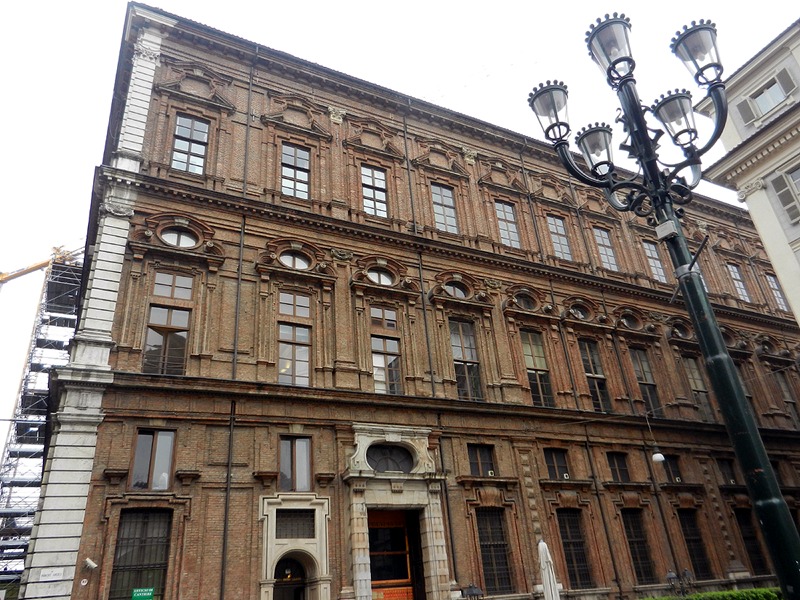
Lead image: The Museo Egizio in Turin, founded in 1824 around Bernardino Drovetti’s collection.