In September 1967, a small gallery called La Bertesca in Genoa filled its rooms with rope, glass, vegetables, cages and fire. The exhibition, Arte Povera – Im Spazio, brought together a handful of young Italian artists none of whom had exhibited together before, and it took its name from an essay published that same year by the 27-year-old critic Germano Celant. He called the work “poor art,” and the label stuck for a generation of practice that had almost nothing else in common except a refusal of oil paint, bronze and marble.
Celant’s essay, Arte Povera: Notes for a Guerrilla War, was written as a call to arms rather than a style guide. He wanted artists to work with materials that carried no inherited prestige: soil, coal, glass, neon tubing, live plants, industrial felt, newspaper, rags. “Poor” did not mean cheap so much as unprocessed, resistant to the market’s preference for durable, saleable objects. The artists Celant grouped under the term, including Michelangelo Pistoletto, Mario Merz, Jannis Kounellis, Giovanni Anselmo, Alighiero Boetti, Pino Pascali and Giuseppe Penone, were based mostly in Turin, Genoa, Milan and Rome, and many of them had only just left art school. Celant followed the Genoa show with further group exhibitions over the following year, including one at the Galleria de’ Foscherari in Bologna in 1968 that helped fix the roster of names now treated as the movement’s core.
A Venus made of rags
Pistoletto had already made his name before 1967 with the Quadri specchianti (mirror paintings), begun in 1962: life-size figures, traced from studio photographs and painted onto tissue paper, then mounted on polished steel sheets that reflect the viewer and the room in real time behind them. The Venere degli stracci (Venus of the Rags), first made that same watershed year, pushed the same confrontation between the fixed image and the present moment into three dimensions. A plaster reproduction of a classical Venus, her back turned to the viewer, faces a mountain of used clothing nearly as tall as she is; the sculpture reads as inherited beauty staring down the discarded material of contemporary life. Pistoletto has made several further versions since, in various sizes and materials, and in June 2023 the city of Naples installed one in Piazza Municipio, in front of the Palazzo San Giacomo, as part of a public art programme.
It stood for two weeks. In the early hours of 12 July 2023 the installation caught fire and was destroyed; investigators opened an inquiry into whether the blaze was accidental or deliberate. Rather than seek public donations to replace it, Pistoletto, then 90, financed a new version himself and incorporated salvaged fragments of the burned original into the rebuild, describing the process in terms of regeneration rather than repair. The renewed sculpture, made with fire-resistant materials, was reinstalled in the same square in early 2024 as a permanent donation to the city.
Merz’s igloos and Kounellis’s horses
Mario Merz spent the years after 1968 building igloo-shaped structures out of metal armatures, glass, stone, wax and neon writing, treating the igloo as a basic, portable form of shelter opposed to the fixed architecture of museums and houses. He continued the series until his death in Turin in 2003; the Fondazione Merz, established there in 2005 and now led by his daughter Beatrice Merz, holds the largest concentration of his and Marisa Merz’s work. Jannis Kounellis pushed the movement’s materials furthest from convention in 1969, when he installed twelve live horses tethered along the walls of Galleria L’Attico in Rome, an artwork with no object to sell or conserve, existing only for the duration the animals stood there. The piece was restaged with real horses at Gavin Brown’s Enterprise in New York in June 2015, its first showing in the United States, and it drew a protest from animal-rights campaigners outside the gallery.
Other members of the group worked at a smaller, quieter scale. Giovanni Anselmo’s Untitled (Structure that Eats), made in 1968, consists of a granite block with a fresh head of lettuce wedged against it by a length of copper wire; as the lettuce wilts and is periodically replaced, the sculpture depends on ongoing maintenance to keep functioning at all, a joke at the expense of the idea that sculpture should be permanent. Alighiero Boetti moved even further from the studio, sending designs for embroidered world maps, the Mappe, to be stitched by women artisans in Kabul and Peshawar from the early 1970s onward, each country’s territory filled in with the pattern of its own flag.
Where the movement went after 1970
By the early 1970s Celant had moved from organising exhibitions to writing the movement’s history almost as it happened, and Arte Povera’s core artists scattered into long, independent careers rather than a continuing group programme. Celant himself built one of the most influential curatorial careers in postwar art: senior curator at the Solomon R. Guggenheim Museum in New York until 2008, curator of the 47th Venice Biennale in 1997, and from 1995 artistic and scientific director of the Fondazione Prada, where he restaged canonical exhibitions of the era including Harald Szeemann’s When Attitudes Become Form. He died in Milan in April 2020, aged 79, from complications of coronavirus during Italy’s first, hardest-hit wave of the pandemic. Pistoletto, based in Biella in Piedmont, founded a foundation and school, Cittadellarte, dedicated to art’s social application; Kounellis, who had moved between Rome and Turin for much of his career, died in Rome in 2017; Anselmo and Penone continued exhibiting internationally into the 2020s.
Where to see the work now
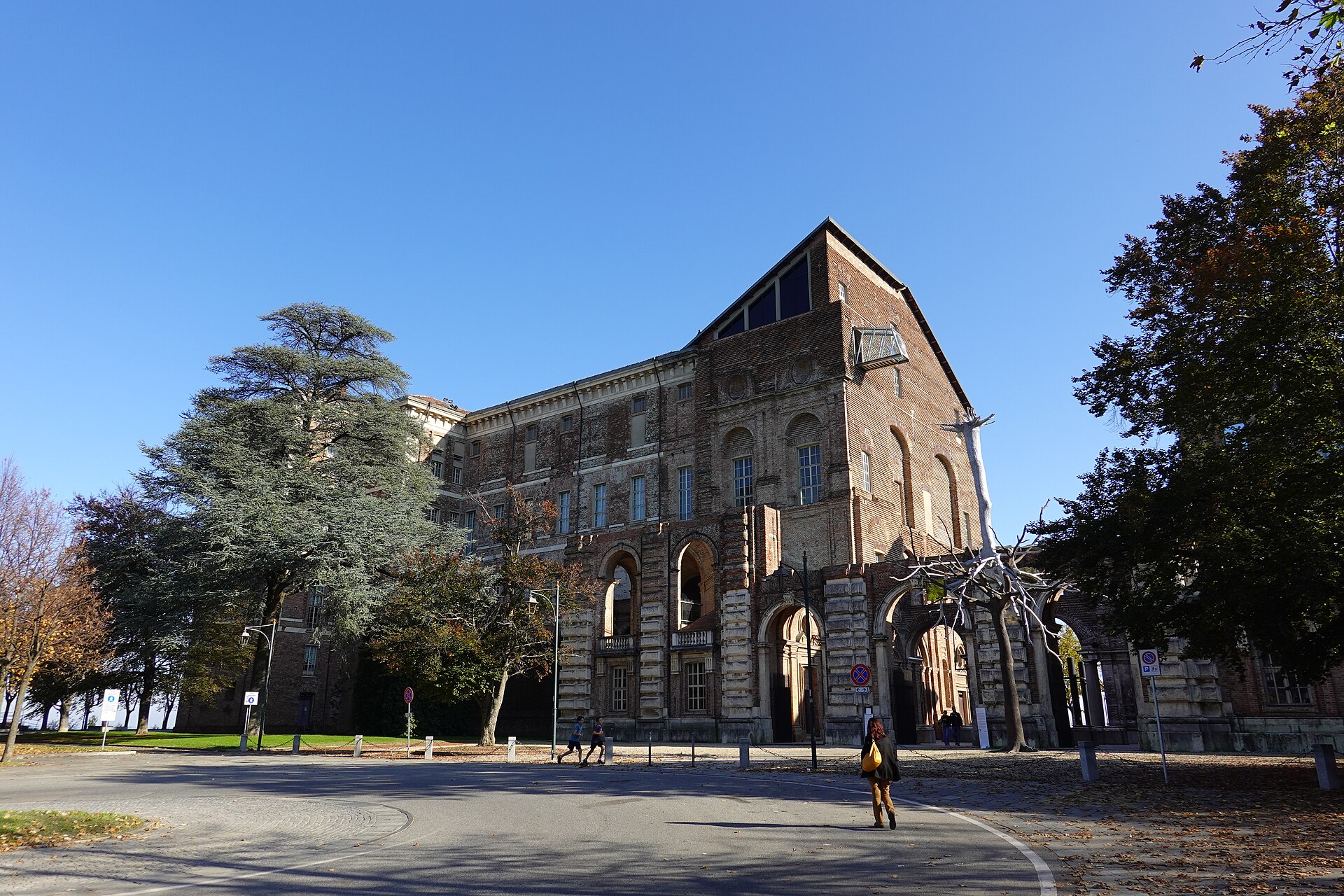
The fullest public collections are in the cities where the movement began. Castello di Rivoli, a Savoy residence outside Turin designed by the architect Filippo Juvarra and converted into a museum of contemporary art in 1984, holds a substantial permanent Arte Povera collection and has staged repeated exhibitions drawing on it, including a dedicated Arte Povera room within its collection displays. In Naples, the Museo Madre has shown major surveys of the movement’s Neapolitan connections, including works by Kounellis, who kept close ties to the city for much of his career. The Fondazione Merz in Turin occupies the former central heating plant of the Lancia car workshops, a piece of 1930s industrial architecture in the Borgo San Paolo district, and continues to organise exhibitions around Mario and Marisa Merz’s work through its archive and research programme. Pistoletto’s rebuilt Venus, meanwhile, still stands in Piazza Municipio, a fire-resistant version of an object that was never meant to last in the first place, and one that now carries the memory of its own destruction built into its material.
Lead image: Castello di Rivoli, near Turin, home to one of Italy’s principal Arte Povera collections.